
Workshop on Dissemination of the Results of the Study on Living Income for Independent Oil Palm Farmers in Aceh
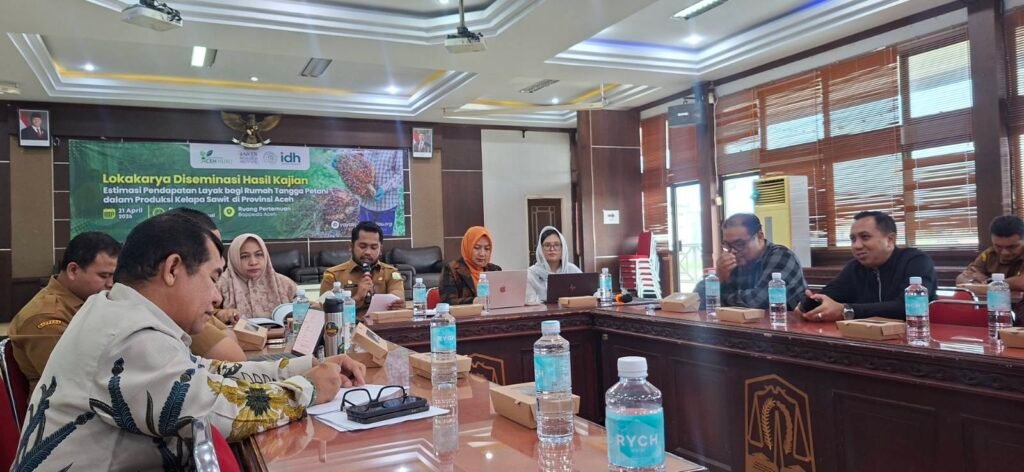
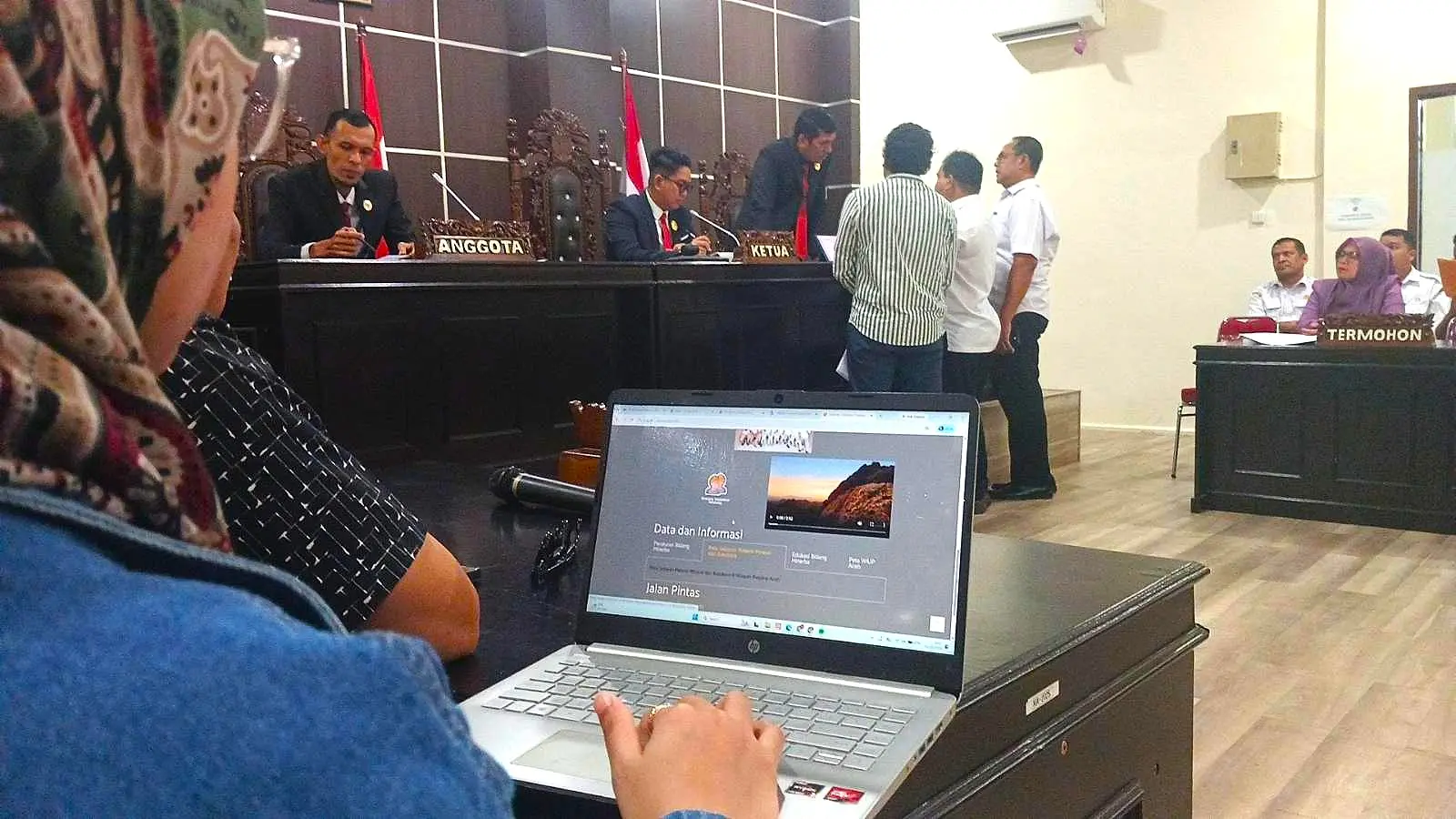
BAPPEDA Aceh held a workshop on disseminating the results of a study on decent income for independent oil palm smallholders in Aceh Province in the 4th floor hall of the Aceh Provincial Bappeda Office on April 21, 2026. The event was opened by the Acting Secretary of BAPPEDA Aceh, Mahdinarmansyah, S.STP, M.M, Dr. Hasrati, SE, MM from Bappeda Aceh, and Mrs. Anne from IDH. HAkA also attended the event. Based on the terms of reference for the activity, it was explained that smallholders or community plantations, both plasma and independent, manage more than 42% of oil palm land in Indonesia and around 52% of the total oil palm land in Aceh Province, making smallholders the “center” of productivity and long-term sustainability of this sector. However, the rapid expansion of oil palm has also given rise to various serious challenges, including deforestation, land tenure conflicts, biodiversity loss, and greenhouse gas emissions.
Aceh Province is among the top ten producers of Palm Oil in Indonesia. Its plantation area accounts for about 3.36% of the total plantation area in Indonesia and contributes about 2.14% of the national crude palm oil (CPO) production. According to BPS (2024), the province has a total palm oil producing land area of 471,357 hectares in 2023, spread across 19 of Aceh’s 23 districts/cities. This land area continues to grow, with an additional 93,778 hectares recorded as still under verification in the same year.
In Aceh, smallholder farmers account for the largest share of plantations, accounting for 52% of the total plantation area, and thus play a crucial role in maintaining local production and the livelihoods of rural communities. Unfortunately, 17% of these smallholder farmers live in poverty. Smallholder farmers are often vulnerable to fluctuations in global palm oil prices.
In this context, the Green Trade Initiative (IDH) Foundation strives to achieve sustainable production in Indonesia, bringing together global palm oil players towards sustainable palm oil production, while simultaneously improving market access and living incomes for smallholder farmers. The Living Income (LI) study uses the Anker® Methodology, developed by Richard and Martha Anker, which is globally recognized as the gold standard for estimating a living wage (LW) and living income (LI). The Anker methodology aims to estimate the cost of a decent standard of living for workers, producers/farmers, and their families.
This study, conducted by the Anker Research Institute and the Aceh Hijau Foundation with funding from the Indonesian Health Development Association (IDH), aims to estimate a benchmark for a decent living income for oil palm farmers in Aceh. The study area covers three districts: East Aceh, Aceh Tamiang, and Nagan Raya. The purpose of the event was to present the results of the study on Decent Living Standards for Smallholder Oil Palm Farmers in East Aceh, Aceh Tamiang, and Nagan Raya.

Admin HAkA
Related Posts