

The Importance of Saving the Sumatran Rhino, an Endangered Species
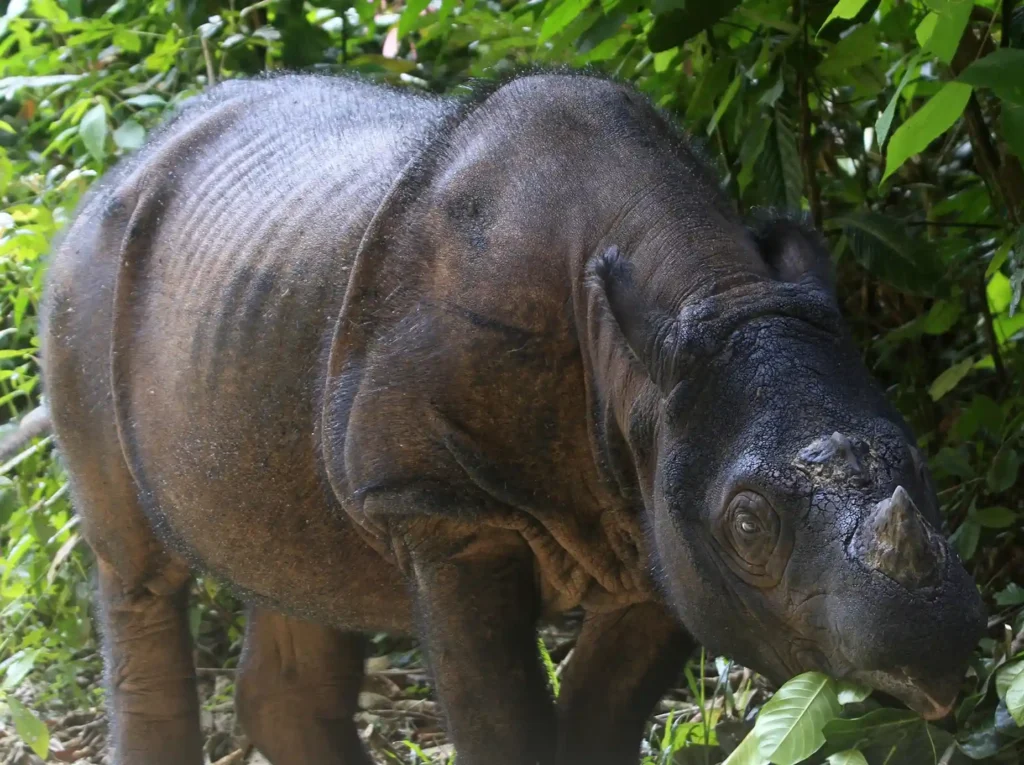
Sumatran rhinoceros (Photo: Junaidi Hanafiah)
Sumatran Rhinoceros (Dicerorhinus sumatrensis)
It is one of the five surviving rhinoceros species in the world. Historically, this land mammal—the largest after the elephant—roamed the Himalayan foothills in Bhutan and eastern India, the Malay Peninsula, the tropical forests of Myanmar and Thailand, and the islands of Sumatra and Borneo; it was also likely present in Cambodia, Vietnam, and Laos (Foose and Strien, 1997). Today, however, the animal is found only in small, isolated pockets within Bukit Barisan Selatan National Park, the Leuser Ecosystem Area (KEL), Way Kambas National Park, and Kutai (Kalimantan). The Sumatran rhinoceros in Malaysia was previously declared extinct in the wild in 2015.
The Role of the Sumatran Rhinoceros in the Ecosystem
Rhinoceroses typically travel long distances each day in search of food, specifically targeting young leaf shoots. This foraging activity indirectly aids forest regeneration, as new shoots sprout where the old ones were consumed. These animals, which love to wallow, act as seed dispersers by carrying forest seeds that adhere to their bodies. Their ability to travel vast distances is crucial for depositing seeds onto the forest floor, providing a favorable medium for germination. Furthermore, they carve out paths through dense vegetation, creating trails for other wildlife.
Current Status of the Sumatran Rhinoceros
This two-horned rhinoceros continues to face the threat of extinction. Its numbers in the wild are estimated to be steadily declining. Some sources state that the current estimated population of the Sumatran rhinoceros is fewer than 100 individuals.
Source: TFCA Sumatra

Admin HAkA
Related Posts