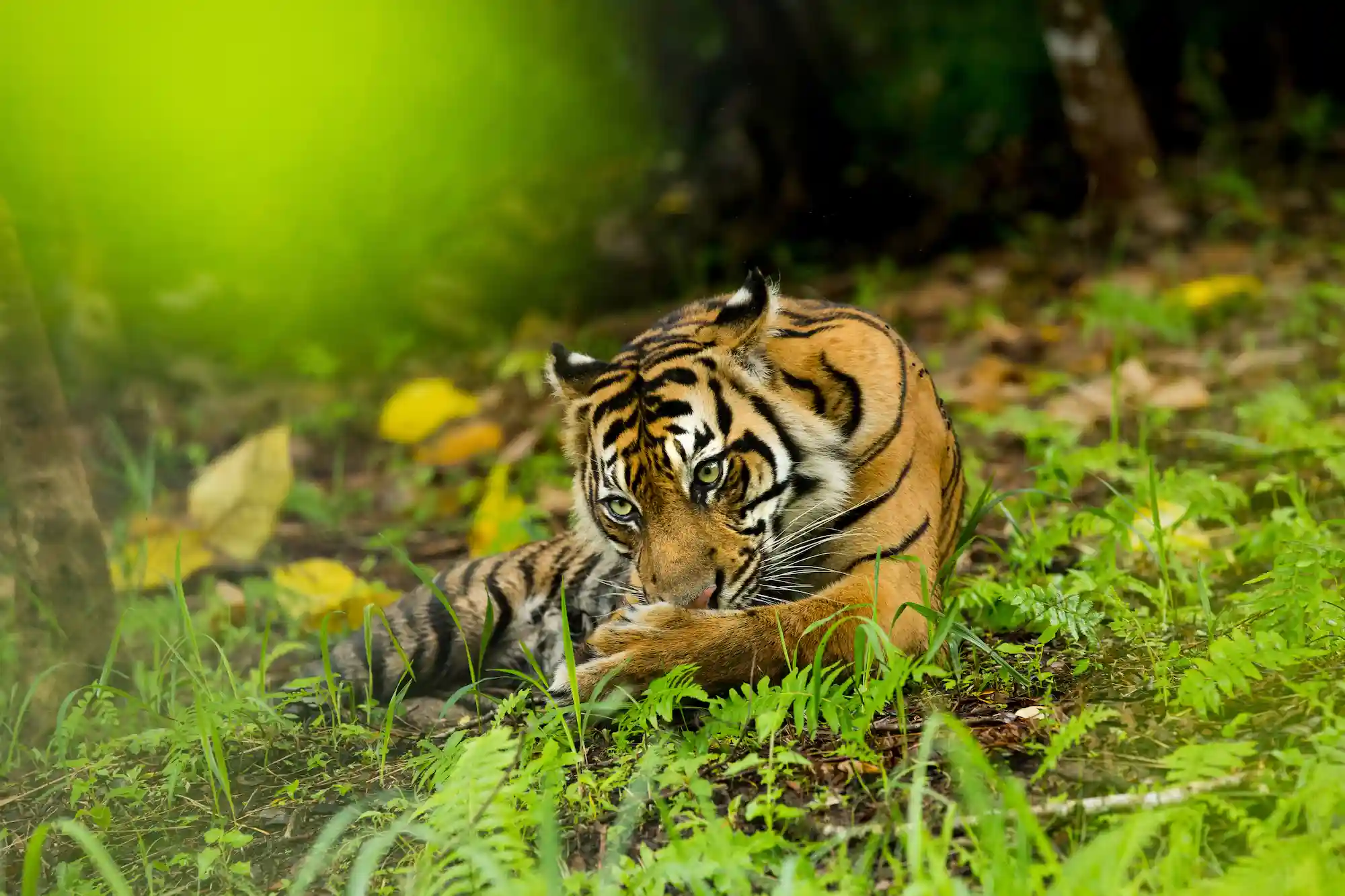

Sumatran tiger (Panthera tigris sumatrae)
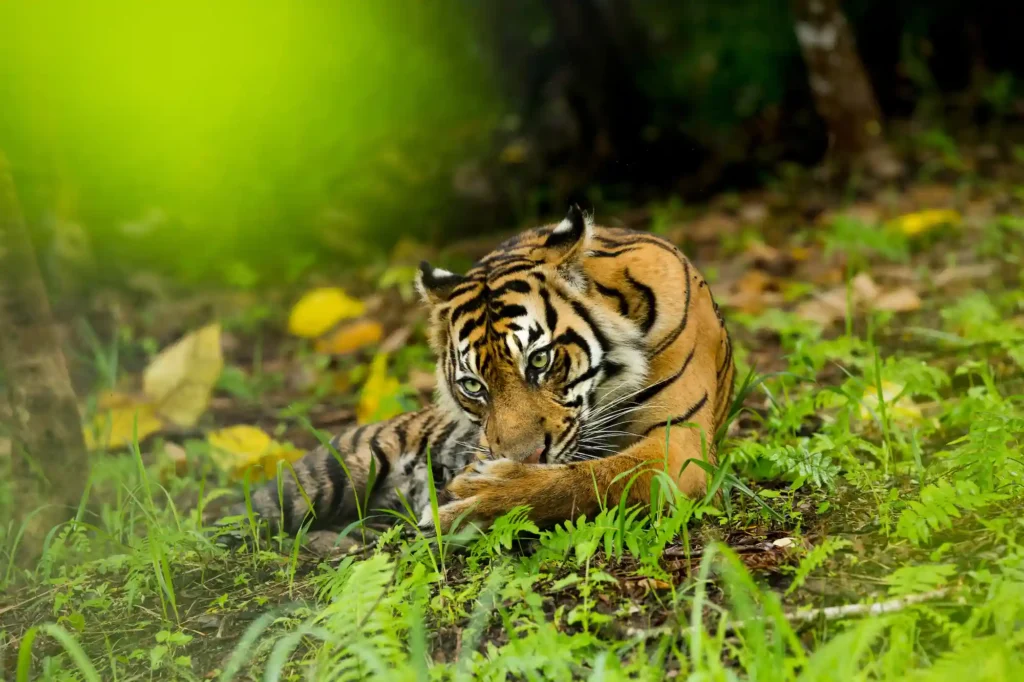
Harimau Sumatera (Foto : Paul Hilton)
Indonesia was once home to three of the world’s eight tiger subspecies; however, two of them—the Javan tiger (*Panthera tigris sondaica*) and the Bali tiger (*P. t. balica*)—have been declared extinct, in the 1940s and 1980s, respectively (Seidensticker et al. 1999). Currently, only the Sumatran tiger (*P. t. sumatrae*) remains, inhabiting areas that are fragmented and isolated from one another. Found exclusively on the island of Sumatra, the Sumatran tiger is the smallest of the extant tiger subspecies in terms of average body size (Kitchener 1999). Males have an average head-to-tail length of 240 cm and weigh 120 kg, while females have an average head-to-tail length of 220 cm and weigh 90 kg.
Since 1996, the Sumatran tiger has been classified as critically endangered by the IUCN (Cat Specialist Group 2002). In 1992, the Sumatran tiger population was estimated at only 400 individuals across five national parks (Gunung Leuser, Kerinci Seblat, Way Kambas, Berbak, and Bukit Barisan Selatan) and two wildlife reserves (Kerumutan and Rimbang), while approximately another 100 individuals were located outside these seven conservation areas (PHPA 1994). This number is believed to have continued to decline.
Current estimates have only been conducted at the site level and apply solely to those specific areas. Based on estimates from various institutions, the minimum number is approximately 250 adult individuals across eight of the at least 18 areas believed to harbor Sumatran tigers; population estimates have not yet been conducted for the remaining ten areas. Although these estimates utilized a generally similar framework, the specific approaches employed varied; therefore, the figures must be interpreted with caution. Furthermore, these values cannot be directly compared to the aforementioned 1992 estimates due to the significant differences in the approaches used.
Source: Strategy and Action Plan for the Conservation of the Sumatran Tiger (Panthera tigris sumatrae) 2007–2017, Ministry of Forestry, 2007

Admin HAkA
Related Posts