

Sumatran Orangutan: A Key Indicator of Forest Habitat Quality
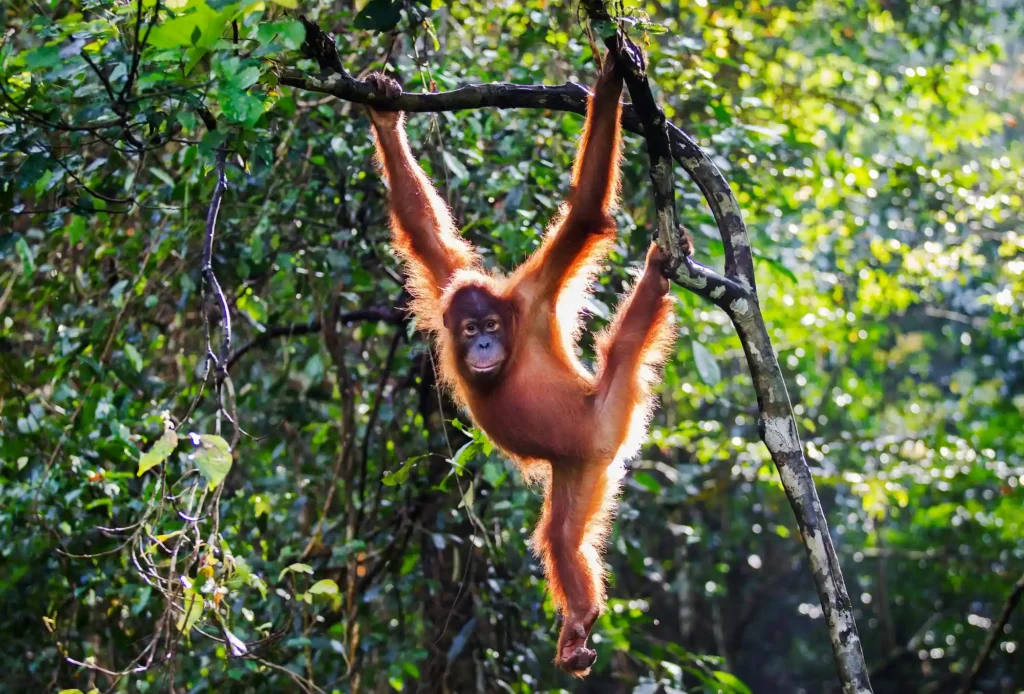
Photo: Paul Hilton
Sumatran and Bornean orangutans are two primate species that form an important part of our rich biodiversity and are the only great apes found in Asia, whereas their three relatives—gorillas, chimpanzees, and bonobos—inhabit the African continent.
Orangutans are considered a “flagship species,” serving as a symbol to raise conservation awareness and mobilize participation from all stakeholders in conservation efforts. The survival of orangutans also ensures the preservation of the forests that serve as their habitat, as well as the survival of other living organisms. From a scientific perspective, orangutans are also highly intriguing, as they represent a branch of great ape evolution distinct from the lineage of African great apes. As the only great apes found in Asia, orangutans are seen as having immense potential to become a tourism icon for the region.
Under Indonesian law, orangutans are classified as a protected species. In the 2002 edition of the IUCN Red List, the Sumatran orangutan was categorized as Critically Endangered—meaning it faces an extremely high risk of extinction—while the Bornean orangutan was categorized as Endangered. Wild orangutan populations have steadily declined over the past few decades due to the loss of lowland forests; however, the rate of this decline has accelerated in recent years. Experts predict that if conditions do not improve, nearly 50% of the current population will be lost within the next decade.
Human-orangutan conflicts occur frequently; while they sometimes result in losses for humans, the consequences are most often fatal for the orangutans. Therefore, efforts to conserve orangutans and their habitats must not be limited to those working in the conservation sector but must also be undertaken and supported by other parties. Source: Indonesian Orangutan Conservation Strategy and Action Plan 2007–2017, Ministry of Forestry (2007).
Read Also:

Admin HAkA
Related Posts