HAkA strives to strengthen the protection, conservation and restoration of Aceh's remaining forests and focuses on the Leuser Ecosystem (KEL). We actively promote the importance of KEL as one of the key landscapes for nature-based solutions.
Always get the latest information, Join us !
Working Hours : Mon-Friday, 09am-5pm
Copyright © 2026. All Rights Reserved.
HAkA strives to strengthen the protection, conservation and restoration of Aceh's remaining forests and focuses on the Leuser Ecosystem (KEL) from existing threats. We actively promote the importance of KEL as one of the key landscapes for nature-based solutions.
Always get the latest information, Join us !
Working Hours : Mon-Friday, 09am-5pm
Copyright © 2026. All Rights Reserved.
HAkA strives to strengthen the protection, conservation and restoration of Aceh's remaining forests and focuses on the Leuser Ecosystem (KEL). We actively promote the importance of KEL as one of the key landscapes for nature-based solutions.
Always get the latest information, Join us !
Working Hours : Mon-Friday, 09am-5pm
Copyright HAkA © 2026. All Rights Reserved.
  • 10 April, 2026
  • Comments Off on Rumbia Women Fishermen Group: Local Wisdom, Collective Courage Amidst the Threat of the Singkil Swamp

Rumbia Women Fishermen Group: Local Wisdom, Collective Courage Amidst the Threat of the Singkil Swamp

Every April 6th, Indonesia commemorates National Fishermen’s Day. This commemoration was first proclaimed during the administration of President Sukarno, specifically through a Presidential Decree. Declaring April 6th as Fishermen’s Day is a dedication to Indonesian fishermen, a community group that has for centuries been the backbone of the nation’s food security, yet often overlooked by policymakers. Fishermen’s Day serves as a dual symbol of gratitude for the abundance of marine and river resources that sustain the nation, as well as a reminder that the fishermen’s struggle is far from over.

Behind the spirit of the commemoration lies the often-overlooked fact that “fisherman” is not a single word. It represents millions of faces, millions of stories, and millions of ways humans survive by the water. From deep-sea fishermen in Sulawesi to swamp fishermen in the interior of Aceh, from motorized boats to bamboo traps set in muddy rivers, this diversity is a true treasure.

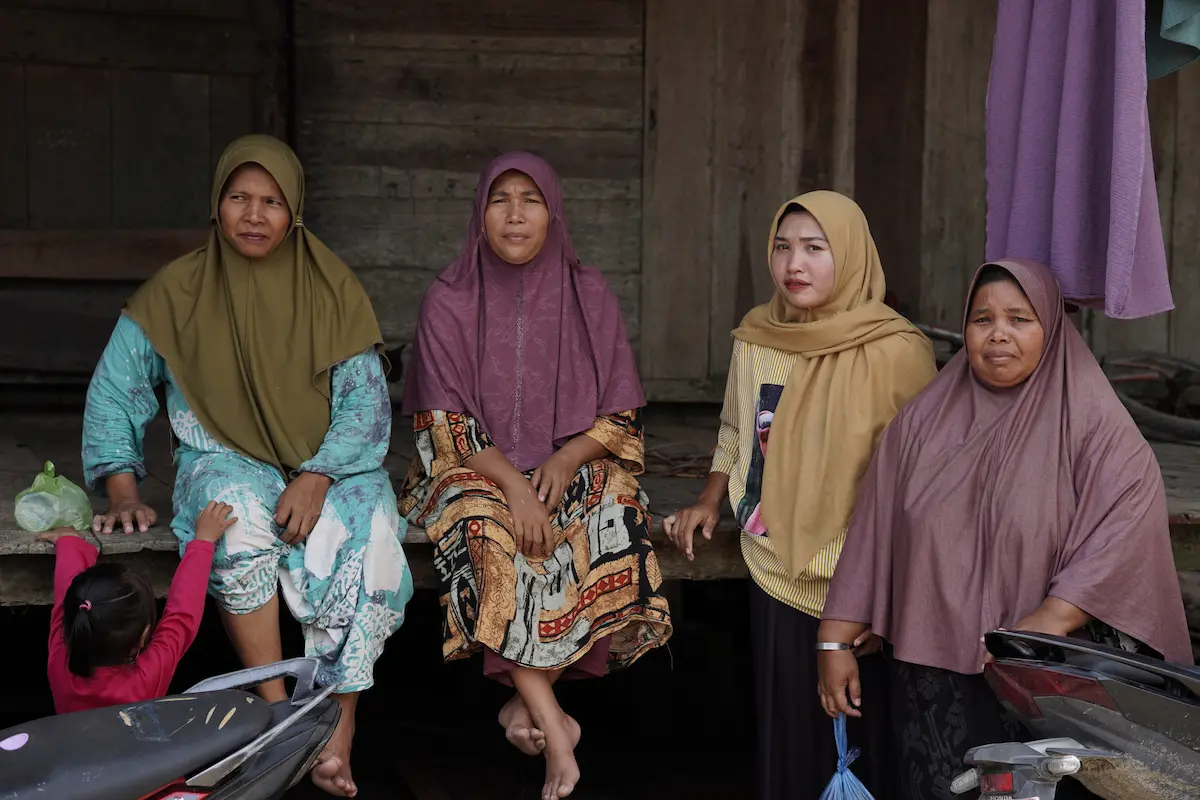
Thus, it is not just a celebration. It is an invitation to look deeper into those who work in silence, whose hands hold the nets before dawn, whose livelihood depends on the rising or falling of the waters. This year, the invitation takes us to a small bay at the western tip of Sumatra, to a village called Teluk Rumbia, in Aceh Singkil where 194 women prove that the spirit of fishermen’s day is not anyone’s monopoly.

Teluk Rumbia Village is a small hamlet named after the rumbia trees that grow abundantly around it. It is fed by tributaries of the Singkil River, one of Aceh’s longest rivers, bringing life and mystery to its calm yet deep currents. River catfish thrive in its peat waters. River shrimp abound among the submerged tree roots. Amidst all this richness, there are resilient people who have long been part of this ecosystem, not as rulers, but as guardians.

This is the landscape where the story of the Rumbia Women Fishermen’s Group begins. A story that cannot be understood without first understanding the land, the water, and the way of life that grows from both.

Getting to Know the Rumbia Women Fishermen Group

In a village surrounded by sago palms and crossed by a peat river, a group was born from a simple yet powerful collective awareness that the struggle would be lighter if shared. In 2023, the Rumbia Women Fishermen’s Group was officially formed, bringing together 194 women from Teluk Rumbia Village, Aceh Singkil, who had long struggled with life on the edge of the swamp.

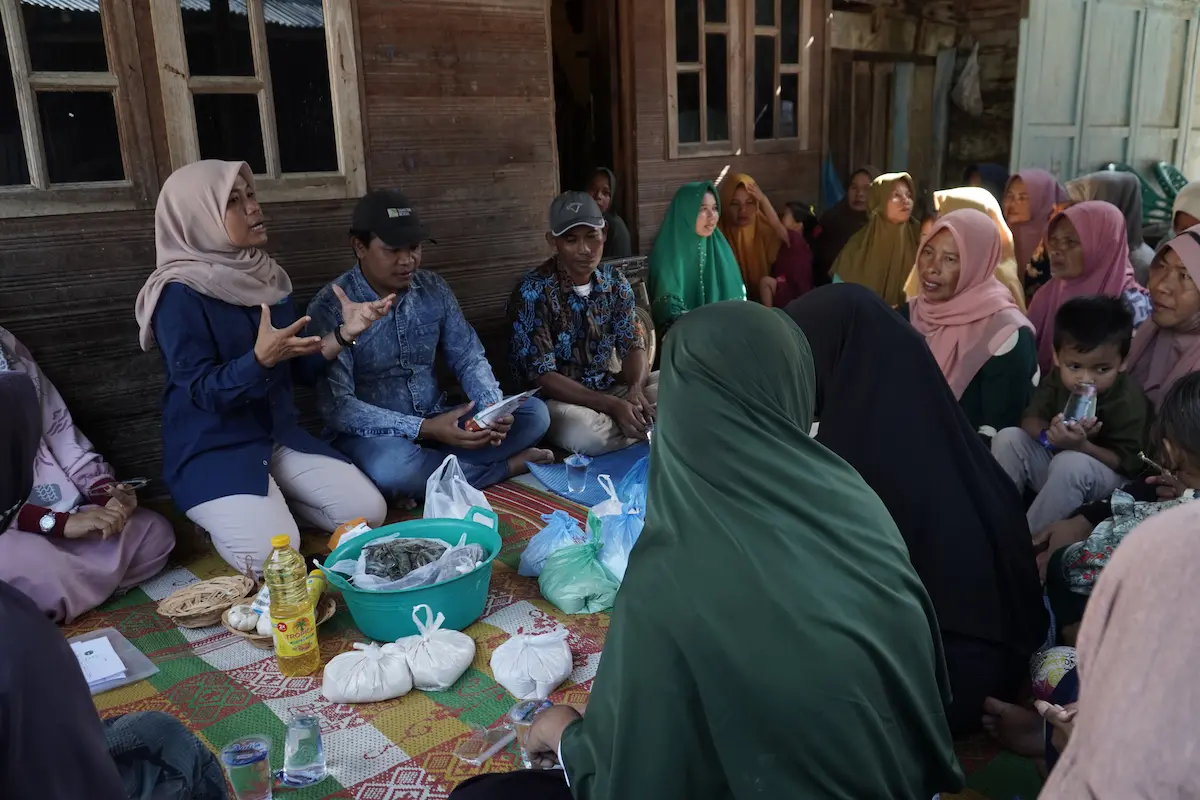
The formation of this group did not occur in a vacuum. The Aceh Natural Forest and Environment Foundation (HAkA) does not dictate direction or determine steps. Their role is more like a bridge, connecting the passion already present within the women of Teluk Rumbia with resources, knowledge, and networks they have previously struggled to access on their own.

The mentoring process opened up previously closed spaces. These women began to learn that what they do every day is not just a “side activity” but a profession worthy of recognition, protection, and development. They began to understand their rights as fisheries workers. They began to talk about the future, not just the future of their families, but also the future of the communities and nature that sustain them.

What makes the Rumbia Women’s Fishermen’s Group special isn’t just because it’s made up of women or because it was formed in a conservation area. It’s the combination of deep-rooted local wisdom and a growing new awareness. They haven’t abandoned their old, proven methods: traps remain their primary fishing gear, knowledge of fishing seasons is respected, and their connection with nature is maintained. But on that foundation, they’re beginning to build something new: a collective identity as proud, organized, and empowered fisherwomen.

Their name “Rumbia” is no coincidence. The rumbia tree, scientifically known as Metroxylon sagu, is a plant whose entire part is useful. Its trunk produces sago flour, which is used as a food source. Its leaves are woven into roofing and crafts. It grows in swamps, in soil considered unproductive by many, yet it is precisely there that it thrives. Like the tree that gives it its name, this group thrives not on ease but on resilience.

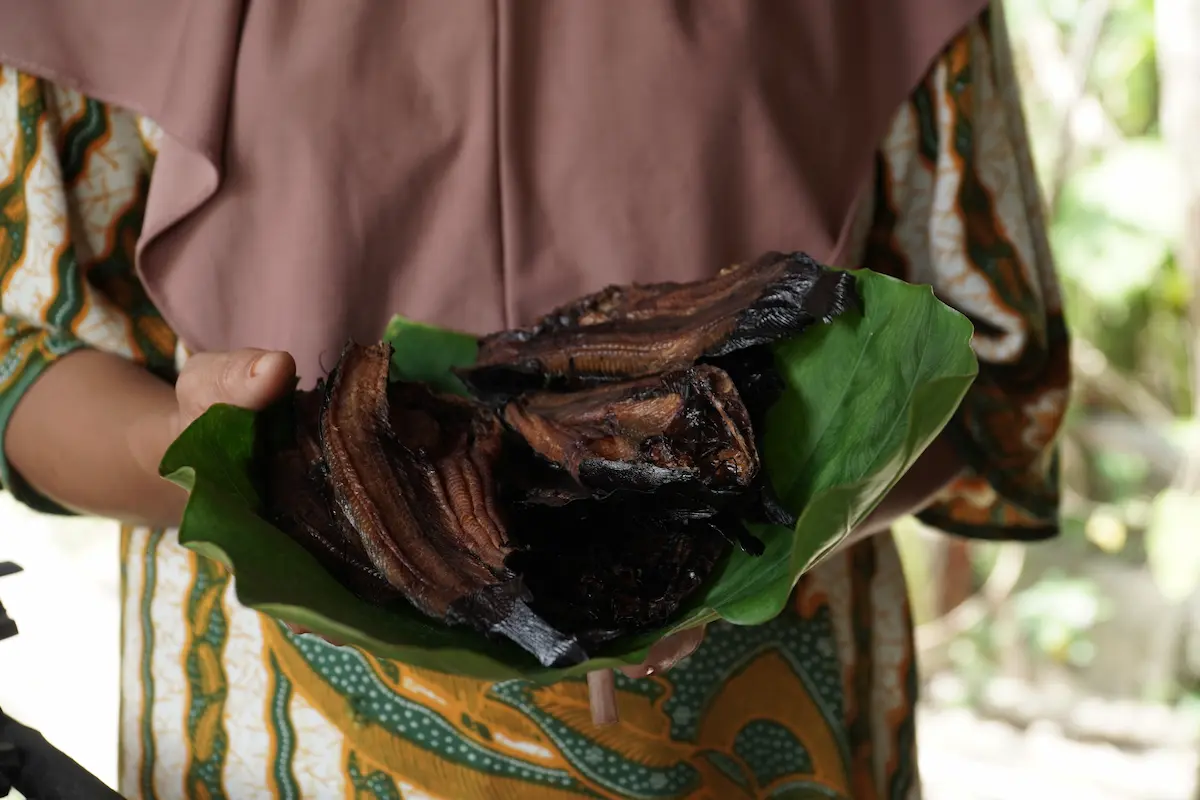
The way the fish traps operate reflects wisdom passed down through generations. These devices are installed on the riverbed or in crevices between submerged tree roots, in locations known only to those who have long lived alongside the swamp. Once installed, the traps are left for one to three days, allowing enough time for fish to enter but not enough for them to die. When it’s time to collect them, trained hands open the traps’ lids with quick, skillful movements, pouring the catch into buckets or baskets brought from home.

Beyond fishing, the lives of the women of Teluk Rumbia are also enriched by the natural resources growing right in their backyards. Rumbia, or sago palms, grow abundantly around the village, providing a long-standing traditional food source. Ripe tree trunks are harvested for sago flour—a long and tedious process, but one that has become part of the rhythm of life they embrace with sincerity. This sago flour then becomes the base ingredient for various foods that support their families and, more recently, the raw material for new products they are developing together.

Crocodile Conflict Threatens Living Space

But something has changed in Rumbia Bay in recent years: estuarine crocodile conflicts in the swampy waters where they have traditionally sought their livelihood. For years, the people of Rumbia Bay have lived side by side with crocodiles, and human-crocodile conflict has been rare. However, crocodile sightings have increased, and more worryingly, these conflicts have already resulted in fatalities.

The psychological impact of this escalating conflict on fisherwomen cannot be measured simply by numbers. It penetrates their inherent courage, eroding the sense of security that is essential for working peacefully. Many women admit to now thinking twice before going into the river alone. Some choose to go in groups, waiting and looking out for each other. Others have changed their working hours, avoiding certain hours considered more dangerous.

What’s important to understand is that the increasing presence of crocodiles in residential areas and fishing grounds isn’t simply a matter of wildlife “going wild.” It’s a symptom of a larger, more structural change. As crocodiles’ natural habitat shrinks due to land clearing pressures in the Rawa Singkil Wildlife Reserve, and as the peat swamp forests that have long provided their habitat are eroded, crocodiles have no choice but to move, and that movement brings them ever closer to human territory. In other words, this conflict isn’t simply a conflict between humans and wildlife. It stems from ecosystem destruction, and it is humans, through all their exploitative activities, that initiate this chain of cause and effect.

Natural Wealth of Rumbia Bay

Teluk Rumbia Village has long held a wealth of untapped potential. The rumbia tree, whose name is even immortalized in the village, grows abundantly around the settlement, towering above the peat swamps, its trunks containing high-quality sago flour. For years, sago has been traditionally processed for family consumption, boiled, grilled, or used as a staple food in place of rice. Knowledge of sago already existed; what was missing was a way to transform it into something that could reach a wider market.

This is where mentoring plays a key role. Through a series of training sessions facilitated in collaboration with HAkA, the Rumbia fisherwomen were introduced to new possibilities hidden within the trees they had known since childhood. Training on making sago flour crackers was a significant turning point. These were not ordinary sago crackers, but crackers infused with the flavor of river shrimp, a unique resource native to the Singkil River. Two local treasures, previously isolated, were now combined into one product with a unique and authentic flavor identity.

The training process opened these women’s eyes to something more than just new recipes. They learned that ingredients they had previously considered ordinary—sago flour squeezed from a tree trunk behind their house, river shrimp caught as bycatch—were actually assets. Assets that, when cultivated with the right knowledge and skills, could become a more stable and diverse source of income than simply selling raw fish at the local market.

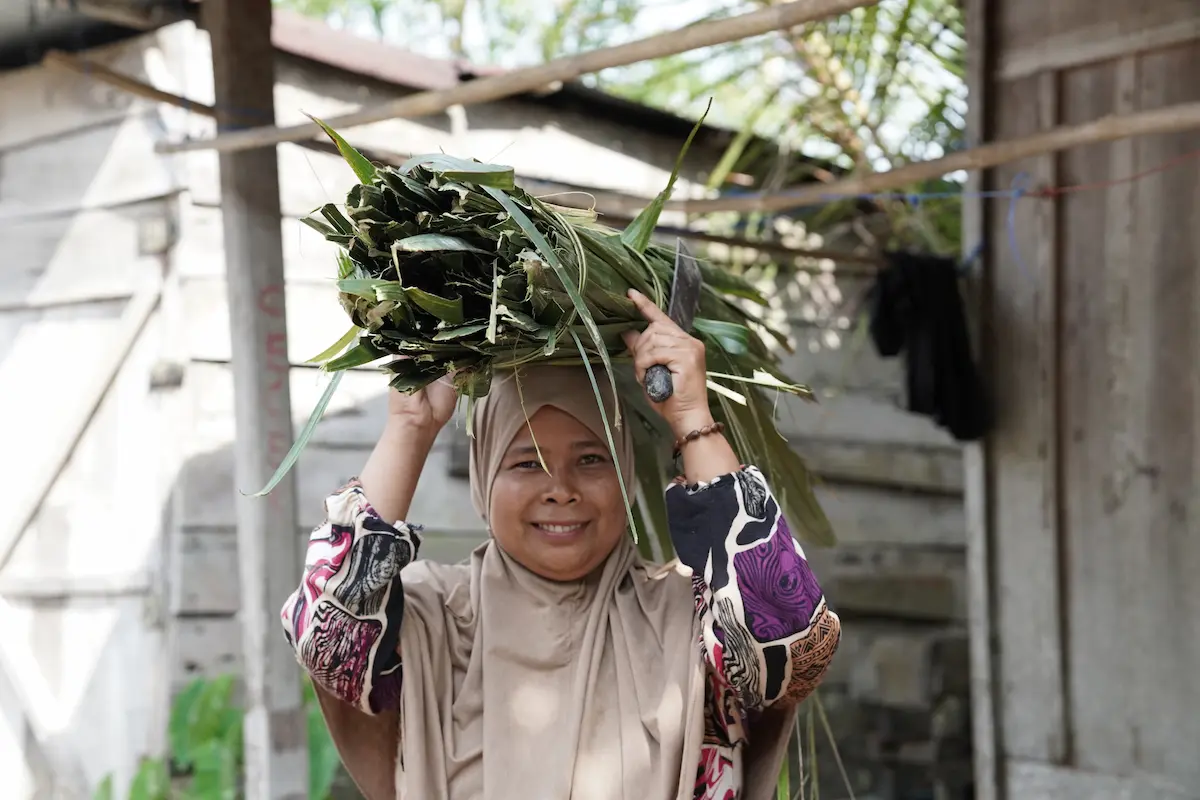
The products produced by this group fall into two broad categories: processed food and handicrafts. Both are derived from the same natural resources: Teluk Rumbia and the women’s skills honed by years of experience. In addition to sago flour, wild pandan leaves, which grow around swamps and village settlements, are used as raw materials for weaving, producing a variety of products, from mats and bags to functional containers, featuring the distinctive aesthetic of traditional Acehnese crafts.

At the end of every long journey, there is always hope which is a reason for someone to keep going. For women fishermen in Rumbia Bay, this hope is not something abstract or far away from their dreams. It is concrete, it has roots and it grows from the same soil where they stand every morning, a peat swamp that holds life in every layer of its depth.

Rizkia Fardilla

Postingan Terkait