

Aceh Needs Around 10 Budget Years to Recover from the Impact of the Disaster
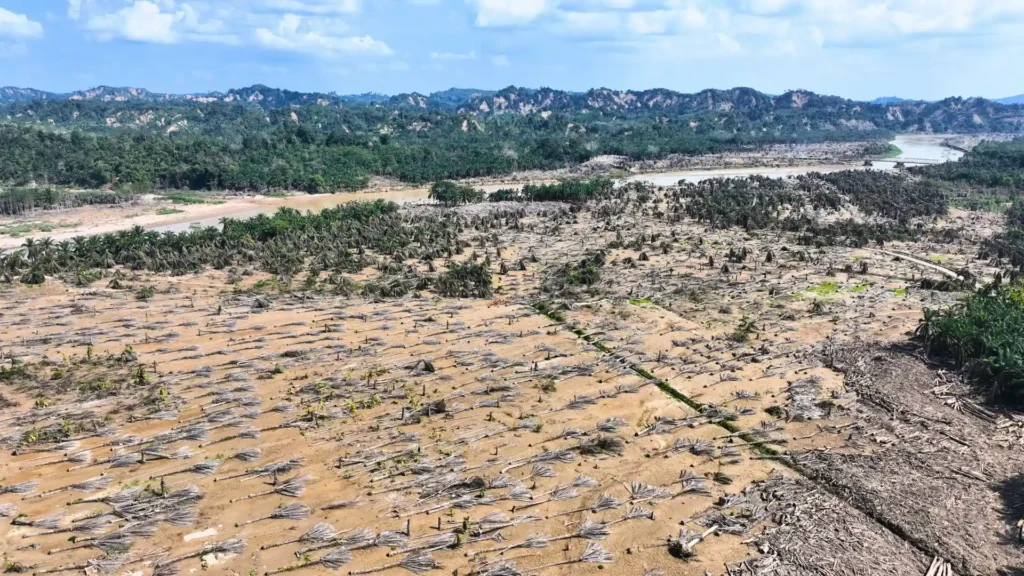
BANDA ACEH – The scale of damage and losses resulting from the floods and landslides that hit Aceh in November 2025 is illustrated by the large recovery budget required. Based on data tanggapi.acehprov.go.id, the total damage and losses due to the disaster in Aceh are estimated at IDR 138.38 trillion.
Rivani, Communications Supervisor at the HAkA Foundation, stated that this figure illustrates the immense impact of the disaster on the lives of the people, the economy, and the infrastructure of Aceh. According to her, the figures for damage and losses were calculated across various sectors—ranging from homes, submerged rice fields, and schools to other public facilities that sustained damage.
“It would take about 10 full Aceh annual budgets to repair the damage caused in a matter of days,” Rivani told AJNN on Thursday, August 13, 2026.
That comparison, she said, is used to illustrate the scale of the damage and losses relative to Aceh’s fiscal capacity, rather than to suggest that Aceh literally requires 10 years to recover.
When compared to the 2026 Aceh provincial budget (APBA) of approximately Rp 12.23 trillion, the total damage and losses—amounting to Rp 138.38 trillion—are equivalent to more than 11 years of the Aceh budget. Meanwhile, rehabilitation and reconstruction needs are estimated to reach Rp 153.25 trillion, equivalent to about 12–13 years of the Aceh budget.
However, Rivani emphasized that disaster recovery does not rely solely on the Aceh Provincial Budget (APBA). The process also involves the central government, regency and city governments, as well as various other funding sources.
The impact of disasters, he noted, does not stop at physical damage and economic losses. There are ecological losses that, in many cases, cannot be fully translated into monetary value.
These losses include, among others, the decline in the hydrological functions of the watershed, damage to forest cover, erosion and sedimentation, the loss of habitat and biodiversity, and a reduction in various ecosystem services.
“Based on available economic calculations alone, the scale of this damage is already equivalent to more than a decade’s worth of Aceh’s provincial budget. If long-term ecological impacts are comprehensively factored in, the scope of the losses could be far greater,” she said.
Rivani assesses that the magnitude of the impact of the November 2025 disaster cannot be separated from Aceh’s environmental conditions, including changes in forest cover over the last two decades.
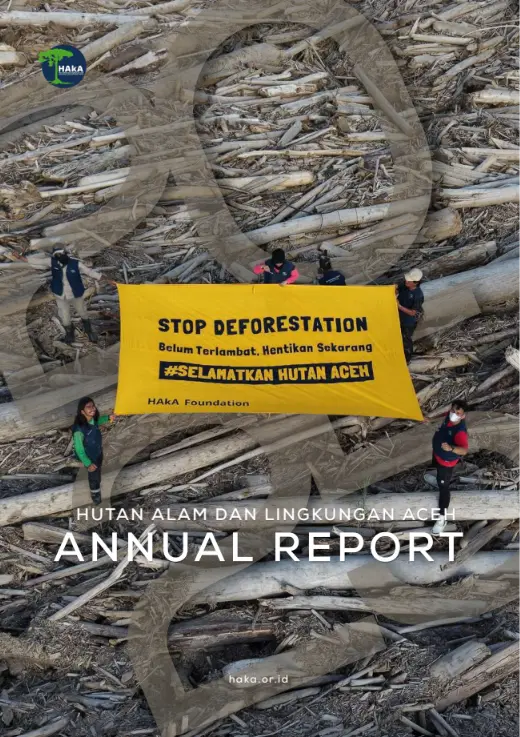
Between 2003 and 2023, she said, Aceh lost 324,488 hectares of forest cover. This figure is equivalent to approximately 10 percent of the total forest remaining in Aceh.
The data is the result of an analysis by the HAkA Foundation and BPS Aceh, launched in February 2025.
According to Rivani, deforestation does not merely represent the loss of forest cover but also serves as a warning of increasing ecological vulnerability.
Any loss of forest cover, she said, means a reduction in the area’s capacity to retain rainwater, store groundwater, and maintain slope stability.
“The disasters that have occurred and will occur are the result of decisions we have made regarding land, forests, and the environment—decisions that have accumulated over the years,” she said.
She considers the loss of 324,488 hectares of forest over a 20-year period to be more than just a statistic; rather, it is the consequence of various decisions regarding land-use and natural resource utilization.
Therefore, Rivani questions whether this pattern will be allowed to persist or if it will begin to change through policies that place greater emphasis on public safety and environmental carrying capacity.
The November 2025 disaster, according to him, should serve as a reminder that decisions regarding land conversion, plantation licensing, forest rehabilitation, and spatial planning carry long-term consequences.
“Those decisions are not merely matters of administration or development. They also determine environmental resilience, public safety, and the future of Aceh,” she said.***
This article was published on AJNN.net under the title “Aceh Needs Around 10 Budget Years to Recover from the Impact of the Disaster.” Written by Irfan Habibi; edited by Asrul.

Admin HAkA
Related Posts