
Beyond Access to Information: Access Testing as a Strategy for Environmental Advocacy and Public Accountability
By: Nurul Isnina Dharma
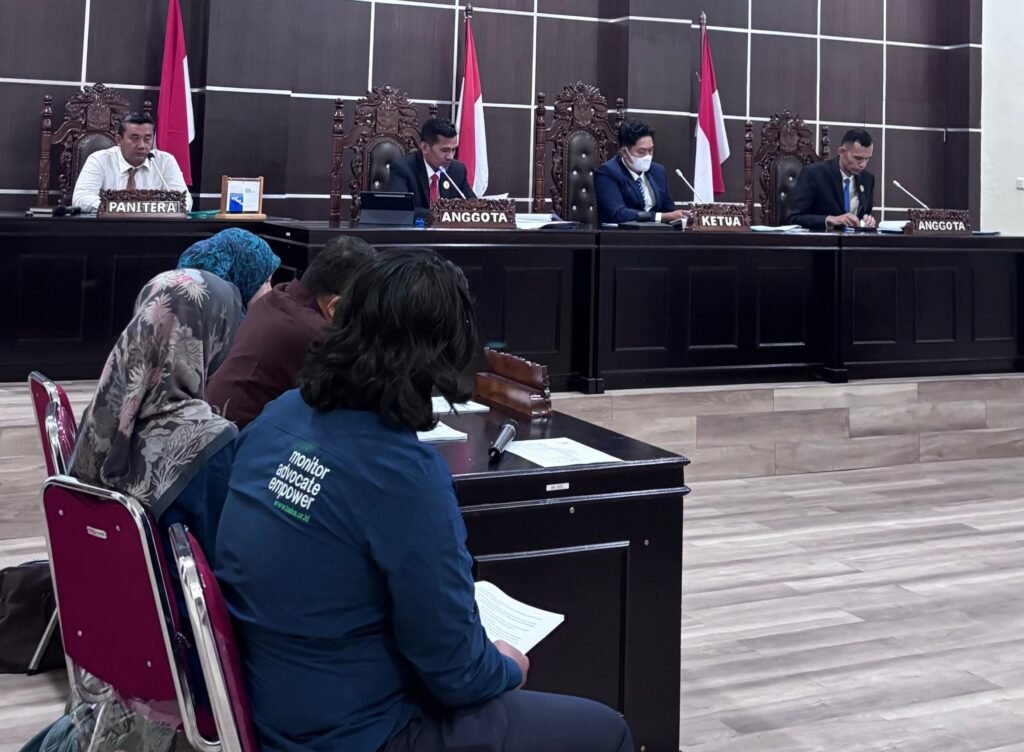
There is one thing I have increasingly realized after being involved in the public information request process several times: requesting information is not always about obtaining a document. Initially, I viewed information requests quite simply. There is information needed and a public body that holds it; our task is to submit a request and hope the requested document is provided. However, through my ongoing involvement in access-to-information proceedings, I have come to see that the process is actually far more complex.
A request for information can lead us to larger questions: What does the state actually know? Where is that information stored? Who has control over it? Why is certain information disclosed while other information is withheld? What is the legal basis for refusing access? And, most importantly, what can we do when information that should be accessible is nevertheless denied? From there, I began to see access testing not merely as a mechanism for obtaining information, but as an advocacy strategy.
Information Is More Than Just a Document
In environmental advocacy, information plays a crucial role. When addressing issues related to plantations, mining, forestry, land, licensing, or natural resource management, we are dealing with public decisions that have tangible consequences for communities and the environment. However, understanding how such decisions are made requires access to relevant and reliable information.
Who issued the permit? On what basis was the permit granted? Where is the permitted area located? What is the legal status of the land? Are there any environmental documents associated with the permit? Who controls the concession? How is the concession monitored and supervised? Have the company’s legal and regulatory obligations been fulfilled?
These questions may sound simple. But in practice, finding the answers is not always straightforward. Information can be scattered across different public bodies. Some is available on official websites, some can only be obtained through information requests, and some only emerges when we begin questioning why the information has not been provided.
This is where I began to see that access to information is not merely an administrative matter. It is part of a broader struggle to obtain the knowledge the public needs to scrutinize government decisions. This is, in fact, consistent with the spirit of Law No. 14 of 2008 on Public Information Disclosure. The law not only recognizes the public’s right to access information, but also positions information disclosure as a means of strengthening public oversight of state administration and matters that affect the public interest.
In other words, from the outset, public information disclosure was never intended to be merely about “requesting documents.” It is fundamentally connected to the relationship between information, power, and public oversight.
When an Information Request Becomes a “Test”
In practice, I began to see every information request as a test of access. What is being tested is not merely whether a document is provided, but how a public body responds to the public’s right to information. When a request is submitted, we are, in fact, mapping several things at once.
First, is the information actually held by the public body we are approaching? Second, is the information available and properly documented? Third, is the information considered publicly accessible or exempt from disclosure? Fourth, if access is denied, what is the legal basis for the denial? And fifth, can the grounds for denial be justified and held accountable?
In this context, even a denial can itself become a source of information.
For example, the response “the information is not available” raises a new set of questions: was the information never created in the first place, is it not held by the public body, or does it actually exist but cannot be disclosed?
Likewise, when a public body states that information is exempt from disclosure, the denial should not be treated as the end of the process. Rather, it is where the process of testing the grounds for exemption begins: What is the legal basis for the exemption, and can the restriction be justified?
The Public Information Disclosure Law itself treats exempt information as subject to strict and limited exceptions. Such exemptions must also be based on a consequence test, which considers the potential impact of disclosure as well as the broader public interest in determining whether the information should be disclosed or withheld. Therefore, from my perspective, a denial of access to information does not necessarily constitute a failure of advocacy.
Sometimes, a denial is precisely what opens the door to the next stage of advocacy.
From Information Request to Evidence
In advocacy work, we need evidence.
But evidence does not always come in the form of a single document that directly proves the entire issue. More often, evidence is built from fragments of information. One document may reveal the status of a permit. Another may show its location. Spatial data may reveal changes in land cover. Monitoring documents may indicate the existence of certain obligations. Meanwhile, information from local communities may shed light on what is actually happening on the ground. When these pieces are brought together, we begin to see the bigger picture.
This is where I see the strategic value of access testing.
Information requests can serve as one of the ways to build an evidence base for advocacy. The process can be understood as follows:
Information request → Access → Verification → Evidence building → Advocacy → Accountability
But in practice, the process does not always move in a straight line or proceed smoothly.
Sometimes the information is provided. Sometimes only part of it is disclosed. Sometimes we receive documents that are different from what we expected. Sometimes we are told that the information is not available. Sometimes the request is denied. And at a certain point, we may need to file an objection or take the dispute to the Information Commission.
Yet it is precisely through this entire process that we gain something more valuable than documents alone: an understanding of how public information is managed and how the state responds to citizens’ requests for information.
When Information Disputes Become Part of Advocacy
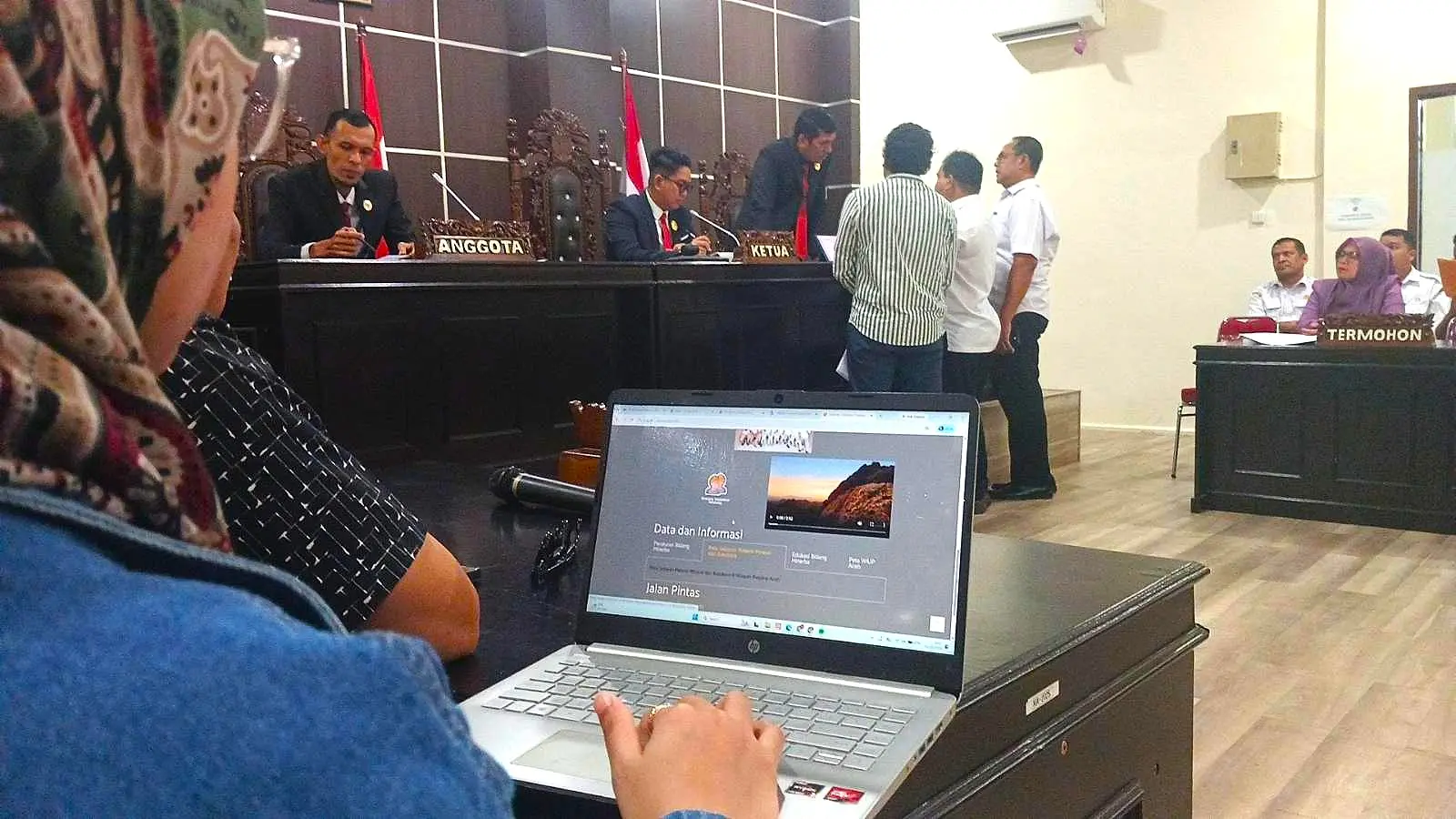
I also began to see that information disputes should not be viewed separately from broader advocacy efforts. In many cases, an information dispute may ultimately come down to a seemingly simple question: should a particular piece of information be disclosed to the requester or not?
But for civil society organizations, the context is often much broader.
The information being requested may relate to a disputed permit, policies that affect communities, forest management, agrarian conflicts, corporate activities, or specific environmental conditions. In other words, information disputes can serve as a supporting instrument for broader advocacy agendas.
The information obtained can be used to:
- conduct investigations and verification;
- compare data across government agencies;
- map policies and permits;
- strengthen reports;
- support dialogue with government authorities;
- foster public participation;
- conduct oversight of public bodies;
- develop policy recommendations; or
- serve as part of a litigation strategy.
Thus, success in an information dispute should not always be understood simply as “successfully obtaining the document.”
There are other, more structural forms of victory: when the process creates a precedent, clarifies standards of transparency, or compels public bodies to explain how they manage information concerning the public interest.
Lessons Learned: We Are Not Only Testing Access, but the System Itself
The longer I have been involved in this process, the more I have come to realize that access testing can also serve as a kind of diagnostic tool for understanding how government works. An information request may reveal fragmentation of data across government agencies. Another may show that certain data actually exists, but is not readily accessible to the public.
Certain denials may reveal differing interpretations of what constitutes exempt information. Meanwhile, the dispute resolution process can show how public bodies defend the grounds for their denials when required to justify them.
Thus, we gain not only information about the subject of our advocacy, but also insight into the administrative system that produces and manages that information.
This matters.
This matters because, in environmental advocacy, we often speak of a “lack of transparency.” But through access testing, we can begin to turn that broad statement into more concrete findings.
For example:
- “The information is not available.”
- “The information is available but has not been publicly disclosed.”
- “The information is publicly disclosed, but incomplete.”
- “The information is available, but provided in a format that cannot be effectively used.”
- “The information is only partially disclosed, without adequate explanation.”
- “Or the information is denied on grounds of exemption that still need to be tested.”
From there, we can see that transparency is not simply a matter of whether information is available, but also of how information is produced, managed, classified, and disclosed to the public.
From “Requesting Information” to “Testing Accountability”
For me, this shift in perspective is significant.
If we see an information request merely as a way to obtain documents, then when those documents are not provided, we may consider the process a failure. But if we see it as an advocacy strategy, every stage can produce something valuable.
When information is disclosed, we obtain evidence. When we are told that the information is unavailable, we gain insight into how data is managed. When information is denied, we can test the legal basis for restricting access. If an objection is rejected, we obtain an official justification that can be examined further. And when a dispute is brought before the Information Commission, we create a space to test how the principles of information disclosure are interpreted and applied.
More importantly, when information is eventually disclosed, we can use it to advance the broader advocacy agenda. It can strengthen investigations, verify findings, identify inconsistencies, support engagement with government authorities, or inform litigation and policy recommendations.
With this perspective, the process becomes more strategic. We are no longer simply asking, “Can we obtain this information?” We begin to ask, “What can this information tell us?” and “How can it strengthen our advocacy and public accountability?” “Did we get the document?”
We begin to ask: “What can we learn from the process of requesting that document?”
Access Testing as Part of an Advocacy Strategy
From this experience, I began to see access testing as one link in a broader and longer advocacy strategy. It can begin with a simple question:
What is actually happening? Then, we seek the information.
Who holds the information? We submit a request to the relevant public authority.
Why was the information not disclosed? We test the grounds for the denial.
What can the available information prove? We build the evidence base.
So, what needs to change? We bring those findings into advocacy, policy, public participation, or litigation.
In this framework, information is not the end goal. It is the infrastructure that supports advocacy. And access testing is one of the ways to build that infrastructure.
At its simplest, the right to information is the right to know.
I have increasingly come to believe that work on information disclosure should not be treated as a standalone administrative task. In the environmental context, access to information determines the extent to which communities can understand decisions that affect their livelihoods and surroundings. People cannot effectively monitor what they do not know.
Meaningful participation becomes difficult when the necessary information is unavailable, and effective advocacy is harder to build when the evidence needed lies behind an information barrier with unclear grounds for restriction.
Therefore, for me, access testing is not simply an effort to obtain documents. It is a way to understand how the state works. It is a way to test the extent to which the principle of transparency is actually upheld. It is a way to build evidence. And ultimately, it can become part of a broader effort to ensure that decisions affecting the environment and the public interest are subject to accountability.
Perhaps that is why, after being involved in information requests and disputes time and again, I no longer see the question, “Can this information be disclosed?” as a simple one.
For me, that question has become:
“Why does this information exist, who holds it, why does the public have or not have the right to access it, and what can we do with the knowledge it provides?”
That, to me, is where access testing transforms from a mere mechanism for obtaining information into an advocacy strategy. Perhaps, ultimately, what we are fighting for is not simply access to a document.
What we are fighting for is the public’s ability to know, to question, and to hold decision-makers accountable.
By: Nurul Isnina Dharma
Project Management Unit Assistant

Admin HAkA
Related Posts