Tengku Inong’s Commitment: A Comparative Study of Ecotourism Models for Sustainable Islamic Boarding School Development
“A Transformative Journey: Teungku Inong Towards Sustainability”
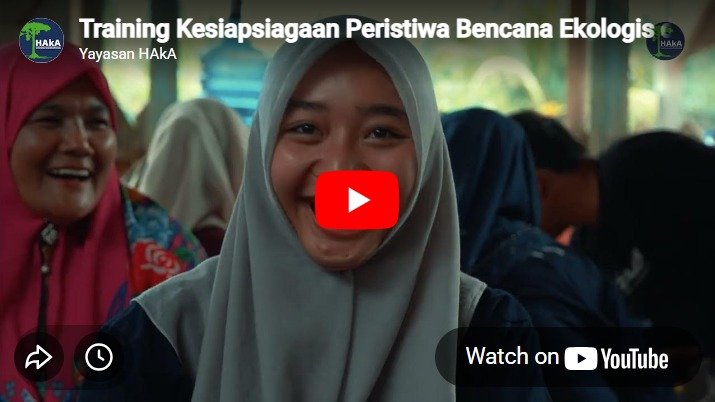
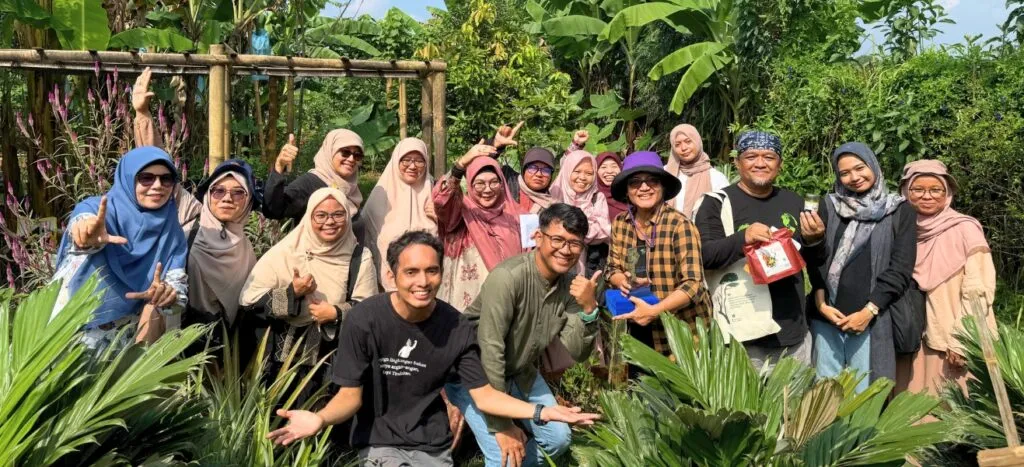
Eight influential Teungku Inong, religious leaders from various dayahs, schools, and religious institutions in Aceh, have undertaken a transformative journey to Jakarta, Bogor, Tangerang, Depok, and Bekasi (Jabodetabek) from May 22 – 30, 2024. Their mission is to learn from best practices in sustainable environmental management and bring these insights back to their communities.
This study tour provided a unique opportunity for these women leaders to witness firsthand the application of sustainability principles at various scales. From the grassroots level in the Cibanteng Eduwisata Village, where they learned about organic waste management and the wise use of natural resources, to larger-scale initiatives like Kebun Hiris in Bogor and waste management at Taman Semangat IPB, the Teungku Inong gained a comprehensive understanding of environmental management.
Beyond the technical aspects of sustainable practices, the trip also provided valuable networking opportunities. The Teungku Inong interacted with various stakeholders, including academics, government officials, youth organizations, and religious leaders, to forge partnerships and collaborate on future initiatives. These connections with institutions such as UNAS, KLHK, Eco-Bhinneka, Kisuci, PP Muhammadiyah, MUI, and the Misykat Al-Anwar Ecological Islamic Boarding School will be instrumental in expanding sustainable practices in Aceh.
Hands-on experiences, such as making bio-saka, eco-enzymes, and recycling plastic waste into key chains, not only deepened Teungku Inong’s understanding of sustainable practices but also ignited their passion for environmental conservation. These practical skills can be shared with their communities, empowering individuals to take action at the local level.
The potential impact of this comparative study is far-reaching. By integrating sustainability principles into their teaching and daily lives, Teungku Inong can inspire and mobilize their communities to adopt environmentally friendly practices. This could lead to the formation of environmental awareness groups, the integration of sustainability into educational curricula, the development of community-based ecotourism initiatives, and increased women’s participation in environmental decision-making.
When the Teungku Inong returned to Aceh, they brought with them not only new knowledge and skills, but also a renewed spirit. Their journey is a living testament to the power of education, collaboration, and individual action in addressing global environmental challenges.