Acceleration of the Presidential Decree on Spatial Planning (RTR) of Leuser Ecosystem National Strategic Area (KSN KEL): A Momentum That Must Not Be Wasted After the 2025 Disaster
By: Dr. Ir. TM Zulfikar, S.T., M.P., IPU. (Aceh Environmental Practitioner & Academic)
The end of 2025 was a stark reminder that nature never truly forgets. The series of flash floods, landslides, and river overflows that hit Aceh and North Sumatra were more than just “seasonal disasters.” They were the result of fragile spatial governance, neglect of land conversion, and a lack of support for key ecosystems. At the heart of it all stood a region that determined the fate of millions of people: the Leuser Ecosystem (LE). Most of the watersheds affected by the floods originate within the LE.
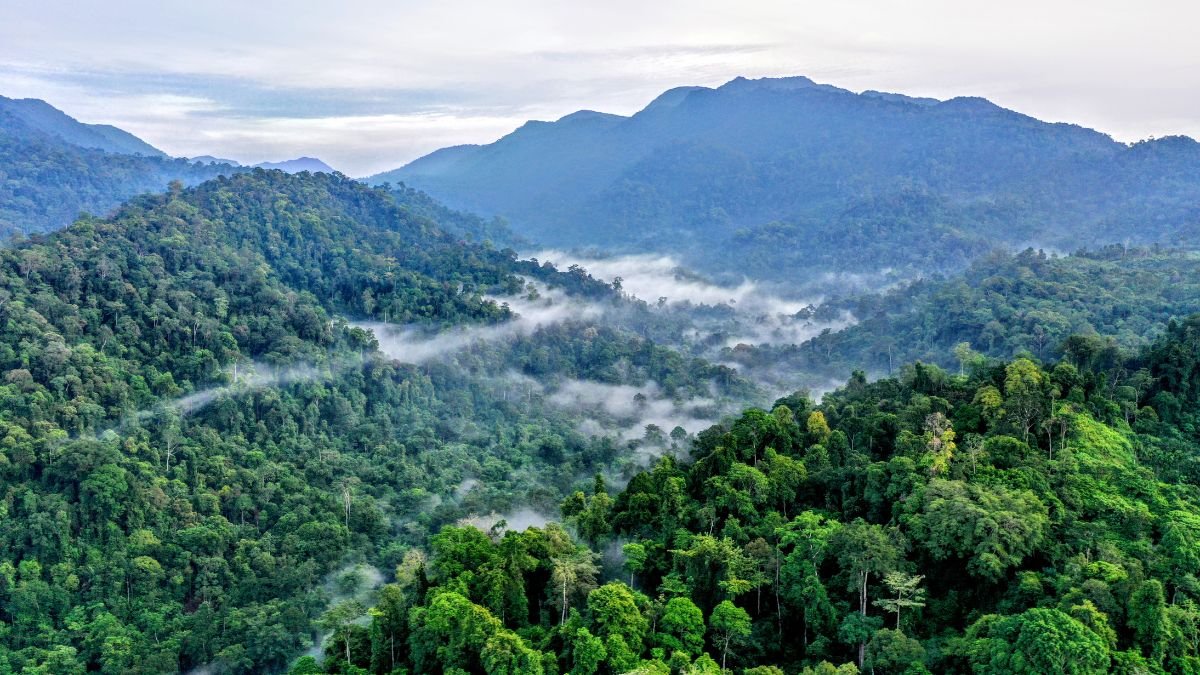
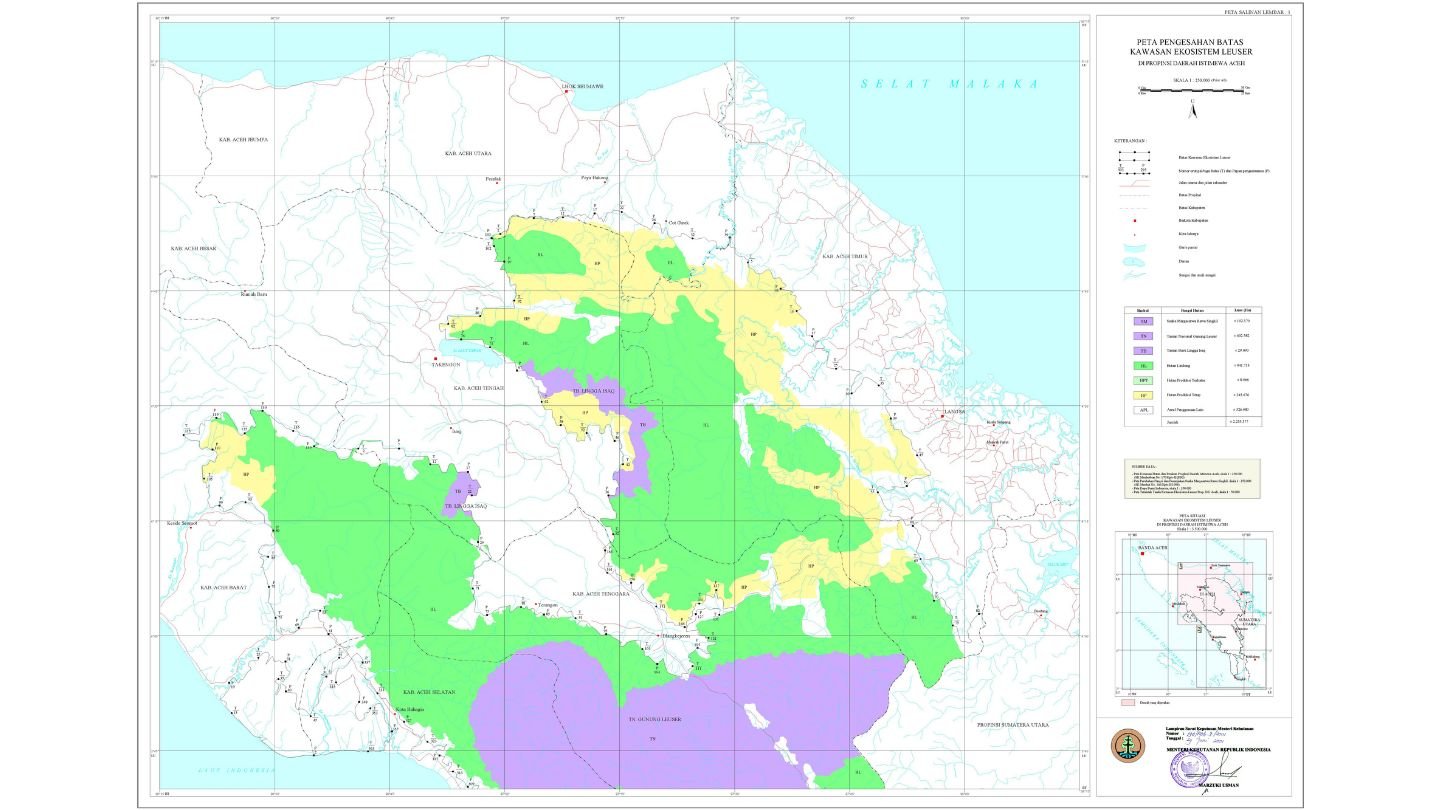
The Leuser Ecosystem is more than just a stretch of tropical forest. It is a life-support system that stores water, regulates the microclimate, supports smallholder agriculture, and serves as the last bastion of Sumatra’s biodiversity. Within it lies the Gunung Leuser National Park (TNGL), but the Leuser Ecosystem extends far beyond a formal conservation area. It is a living ecosystem connected from upstream to downstream.
Disasters That Reveal Facts on the Ground
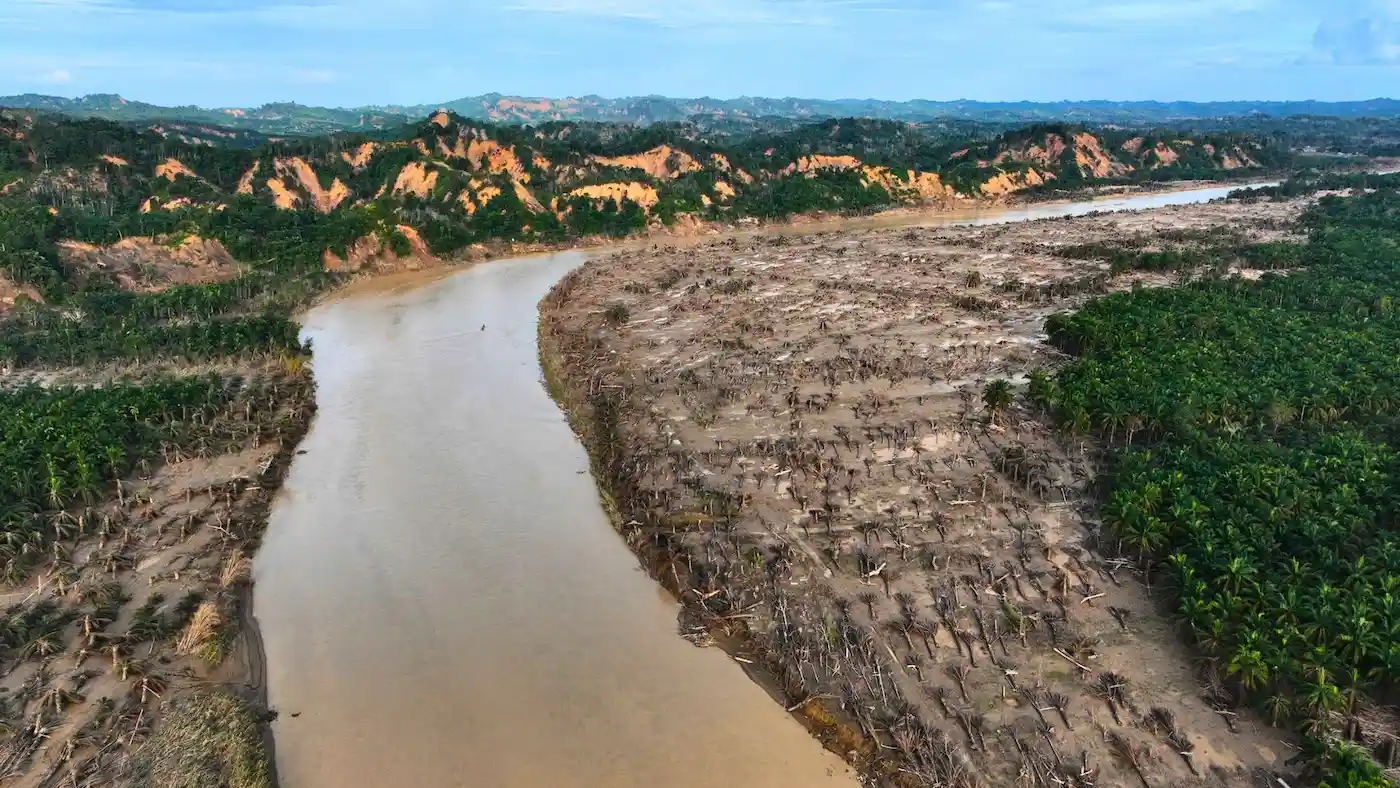
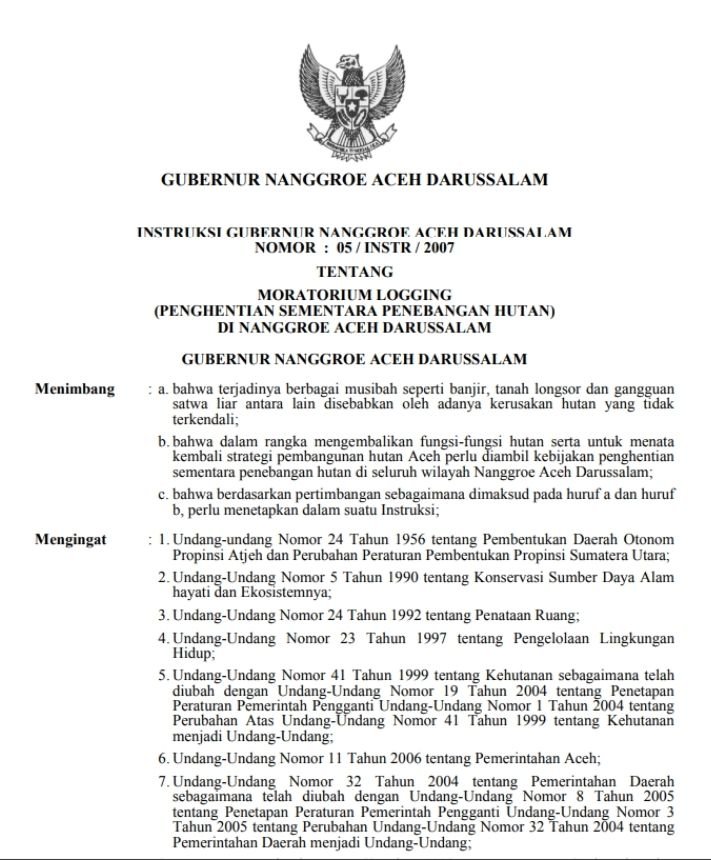
Facts on the ground following the 2025 hydrometeorological disaster show a recurring pattern: areas with fragmented forest cover are most severely impacted. Rivers whose headwaters have lost their natural vegetation overflow more quickly. Slopes cleared for smallholder plantations and mining without adequate management become landslide hotspots.
For too long, we have treated regional spatial planning as an administrative document, not as a public safety instrument. Provincial and district Spatial Plans (RTRW) are often overshadowed by sectoral permits, short-term investment pressures, or local political compromises. As a result, protected areas “on paper” turn into gray areas on the ground.
Also Read: When Aceh’s Forests Live in Speech
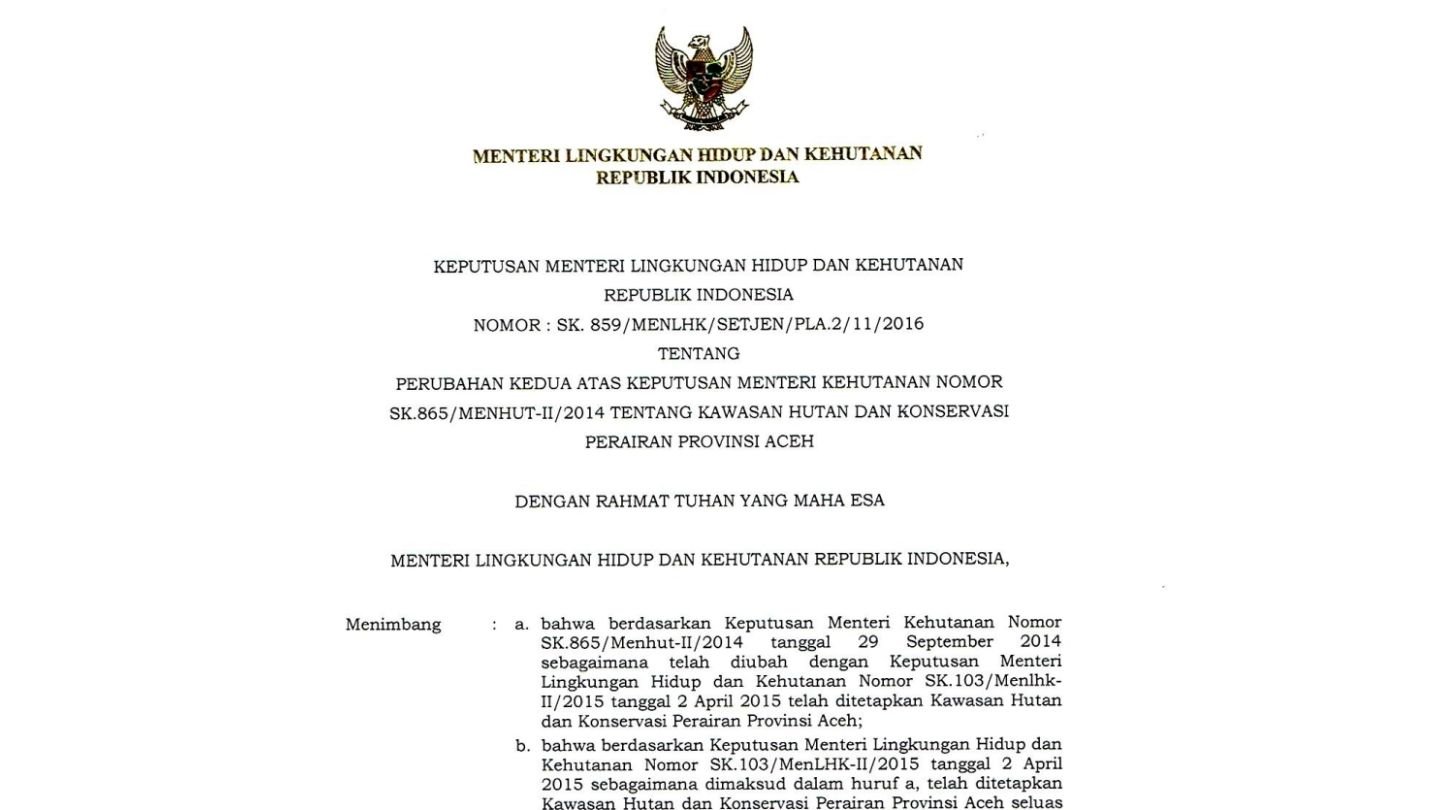
This is where the urgency of accelerating the Presidential Regulation (Perpres) on the National Strategic Area Spatial Plan (RTR KSN) for the Leuser Ecosystem becomes particularly relevant. KSN status is not symbolic; it is a tool to correct policy fragmentation.
Why is it necessary to have a Presidential Decree and why must it be expedited?
First, because the Leuser Ecosystem crosses two provinces and numerous districts, without a strong national regulatory framework, cross-regional coordination will always be held hostage to sectoral egos. The Presidential Decree on the Spatial Planning for the Leuser Ecosystem (RTR KSN KEL) provides a binding legal basis across administrative boundaries—unifying maps, harmonizing zoning, and closing loopholes in overlapping permits.
Second, post-disaster momentum provides a rare political opportunity. Once the public recognizes the connection between lost forests and submerged homes, there’s moral legitimacy to undertake structural reforms. Delaying means allowing collective memory to fade, while old practices continue as usual.
Third, forest and environmental restoration requires spatial certainty. Watershed rehabilitation, peat restoration, and replanting on critical slopes—all of these will be futile if legal opportunities for land conversion remain open above them. The Presidential Regulation on Spatial Planning (RTR) for Leuser Ecosystem National Strategic Areas for the Leuser Ecosystem (KSN KEL) must be the first line of defense before implementing restoration programs.
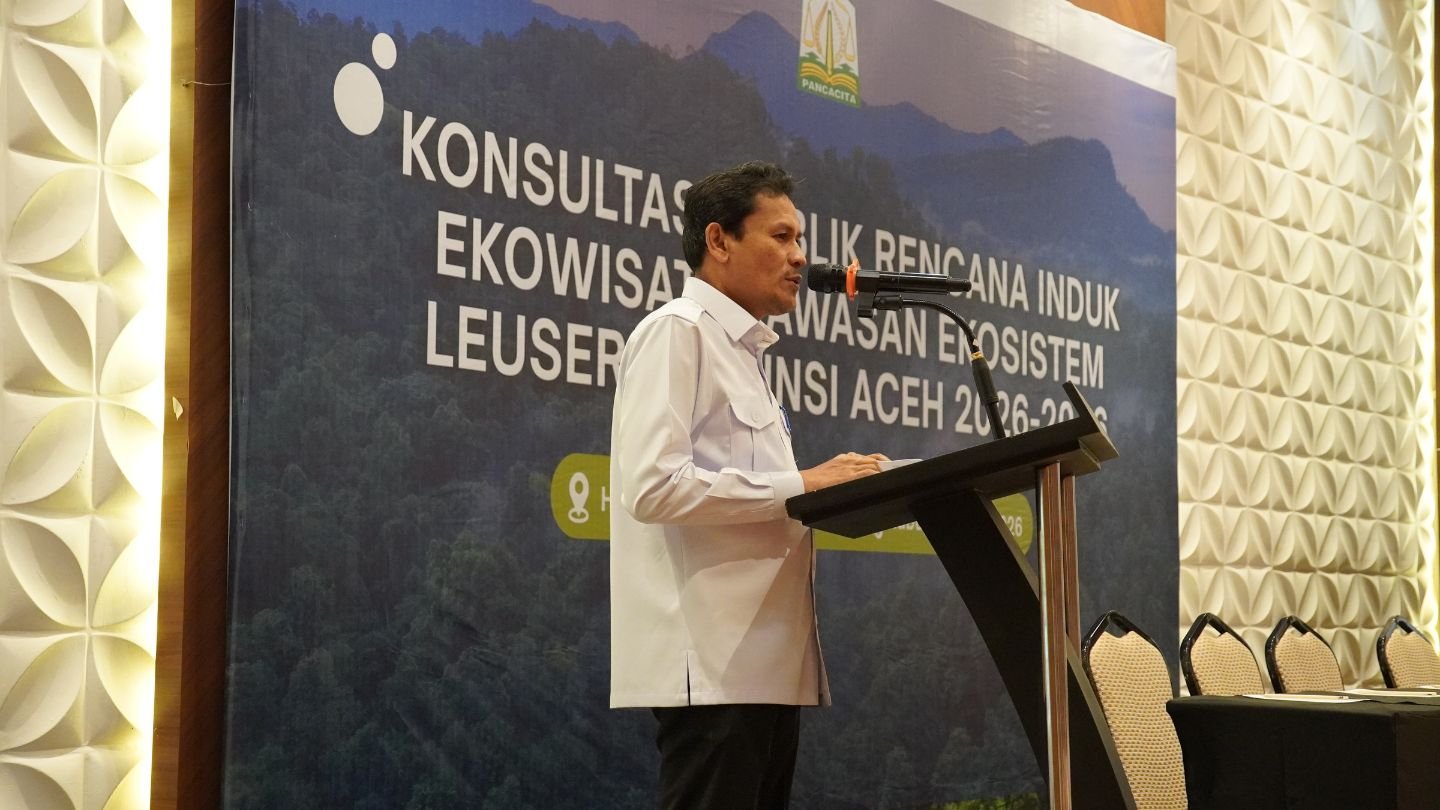
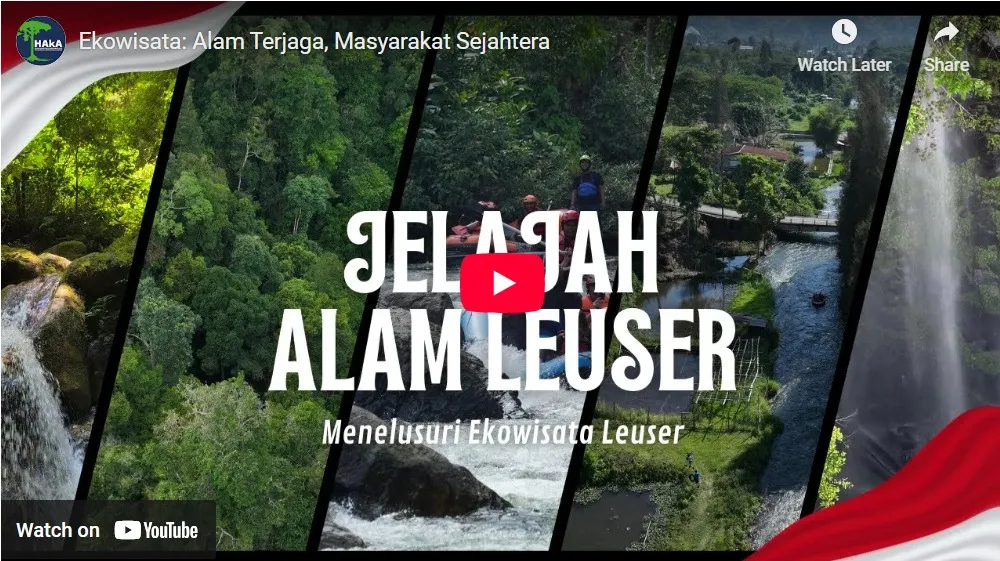
Also Read: BAPPEDA Public Consultation of the Leuser Ecosystem Area Ecotourism Master Plan
More Than Just Zoning
But we must also be honest: Presidential Decrees are not magic wands. Many regulations are born with progressive language, but weaken during implementation. Therefore, acceleration must be accompanied by several critical prerequisites:
Map and permit transparency. A single, publicly available Leuser Ecosystem map, integrated with forestry, plantation, and mining permit data. Without transparency, conflicts will continue to recur.
Consistent law enforcement. Spatial planning without sanctions is merely a moral imperative. Illegal activity in protected areas must be prosecuted, not negotiated.
An economic transition scheme for the community. Many residents depend on land that is now critical for their livelihoods. Forest restoration must be accompanied by alternative livelihoods—agroforestry, social forestry, and community-based ecotourism—to prevent protection from being perceived as an economic threat.
Long-term funding. Ecosystem restoration is not a one- or two-year project. The Presidential Regulation must be accompanied by a sustainable financing design, including opportunities for carbon schemes and payments for environmental services.
Leuser Ecosystem as Natural Infrastructure
It’s time to view Leuser as “natural infrastructure.” If dams and toll roads are considered national strategic projects, then the forests that maintain the water cycle for millions of people are far more strategic. Damage to the Leuser Ecosystem means burdening the national and regional budgets (APBD/APBA) with recurring disaster costs—costs that could be mitigated through ecosystem protection.
The 2025 hydrometeorological disaster taught us an expensive lesson: climate change magnifies risks, but poor spatial governance exacerbates the impacts. We can’t control extreme rainfall, but we can control permitting decisions, zoning, and development direction.
A Test of Political Courage
The acceleration of the Presidential Regulation on Spatial Planning (RTR) for National Spatial Planning for the Leuser Ecosystem (KSN KEL) is a test of the political courage of the central and regional governments. Is the government truly committed to long-term security, or is it tempted again by short-term expansion?
This Presidential Regulation, drafted in a participatory manner, based on scientific data, and enforced impartially, could be a turning point not only in saving the Leuser Ecosystem but also in demonstrating that Indonesia can learn from disasters.
The momentum is already there. The wounds of the floods and landslides are still raw. The question is simple: will we make them the basis for change, or will they become just another footnote in a never-ending cycle of crises? We await the President’s decisiveness.
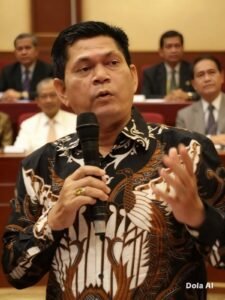
Dr. Ir. TM Zulfikar, S.T., M.P., IPU. (Aceh Environmental Practitioner & Academic)