- 19 December, 2025
- Comments Off on From Linge: The Long Way Home
From Linge: The Long Way Home
By: Hutari Nadhira, Rizkia Fardilla, and Nurul Isnina
Our journey to Takengon began under relentless rain. Wet roads, thin fog, and the pounding rain against the car window formed a steady rhythm that allowed us throughout the drive. We arrived late at night and chose to rest, a short pause before what would turn into a far longer and heavier journey. At that moment, we did not yet understand that this night was not simply an overnight stop, but the start of days that will challenge our strength, our minds, and our will.
The next morning, we continued toward Linge to support the preparations for the Second Nenggeri Linge Festival. The festival was never meant to be merely a celebration of culture. It was a collective effort to reaffirm Linge as an indigenous territory and a conservation landscape, where cultural heritage, ecological stewardship, and the value of musarak are lived, not symbolized. The rain continued to fall, the cold was biting, yet the community’s spirit remained unshaken. Women kept the communal kitchen alive, men prepared the stage and carried equipment. Each person moved quietly and deliberately, like a single body responding to share responsibility. Amid harsh weather, solidarity became a source of warmth.
The opening of the festival was very lively. Friends from the ecotourism network attended, alongside representatives from Syiah Kuala University, the Aceh Office of Culture and Tourism, and Jeffrey Michael Robbins, an Ecotourism Consultant from Canopy. One of the most powerful moments came from LK Ara, a legendary Gayo artist, whose poetry echoed beneath a dark, rain-filled sky. His words felt less like a performance and more like a prayer, grounding, steadying, and unifying. The night closed with Didong Jalu. We were all wet and tired but satisfied that we had all connected genuinely.
Also Read: Working Together to Restore Education After the Disaster, HAkA Cleans Five Schools in Aceh Tamiang
On the second day, the rain showed no sign of stopping. Unease began to surface, particularly as the agenda included rafting and the Tour de Linge, activities that could not be carried out while the river continued to swell. Journalist traveled as far as Pangmoed, a cafe on the Takengon-Blang Kejeren road at KM 56, searching for signal and electricity. They turned empty-handed, except for footage of a river growing increasingly violent and a bag of meatballs. We ate the at the next morning, tasting an unexpected sense of comfort. Only later did we realize the would be our last proper meal before days of rationed instant noodles, as supplies slowly ran out. That night, we postponed activities and restructured the closing, while watching rain that seemed endless.
The next day was meant to be the final of the festival, a time for us to go back home. However, news arrived that the bridge connecting Linge to Takengon was completely destroyed. The weight of the information was crushing. We stood silent, grasping the fact that Linge was sealed off from the rest of the world. Panic was not an option. Responsibility quickly replaced fear. An emergency meeting was held. Four people would attempt to cross first, hopefully, to inform the outside world that we were isolated and in need of assistance. We set specific times for these meetings: 12 p.m. and 2 p.m., over two days. If no help arrived, we would have to rely on our way out.
Before the situation fully settled in, evacuees from neighboring villages began to arrive. They came with stories of separations, loss, and uncertainty. Even while isolated, Linge opened itself to them. In that moment, concern from others eclipsed concern for ourselves. Human solidarity took precedence over fear.
Finally, the day of the first crossing arrived, and the rain returned and the sun never appeared. In moments like these, leadership reveals itself. Bang Abdul, our Community Organizer, moved calmly, observing the river, reading its current, assessing risks, before meeting our eyes in turn, to make sure we were ready not only in body, but in mind.
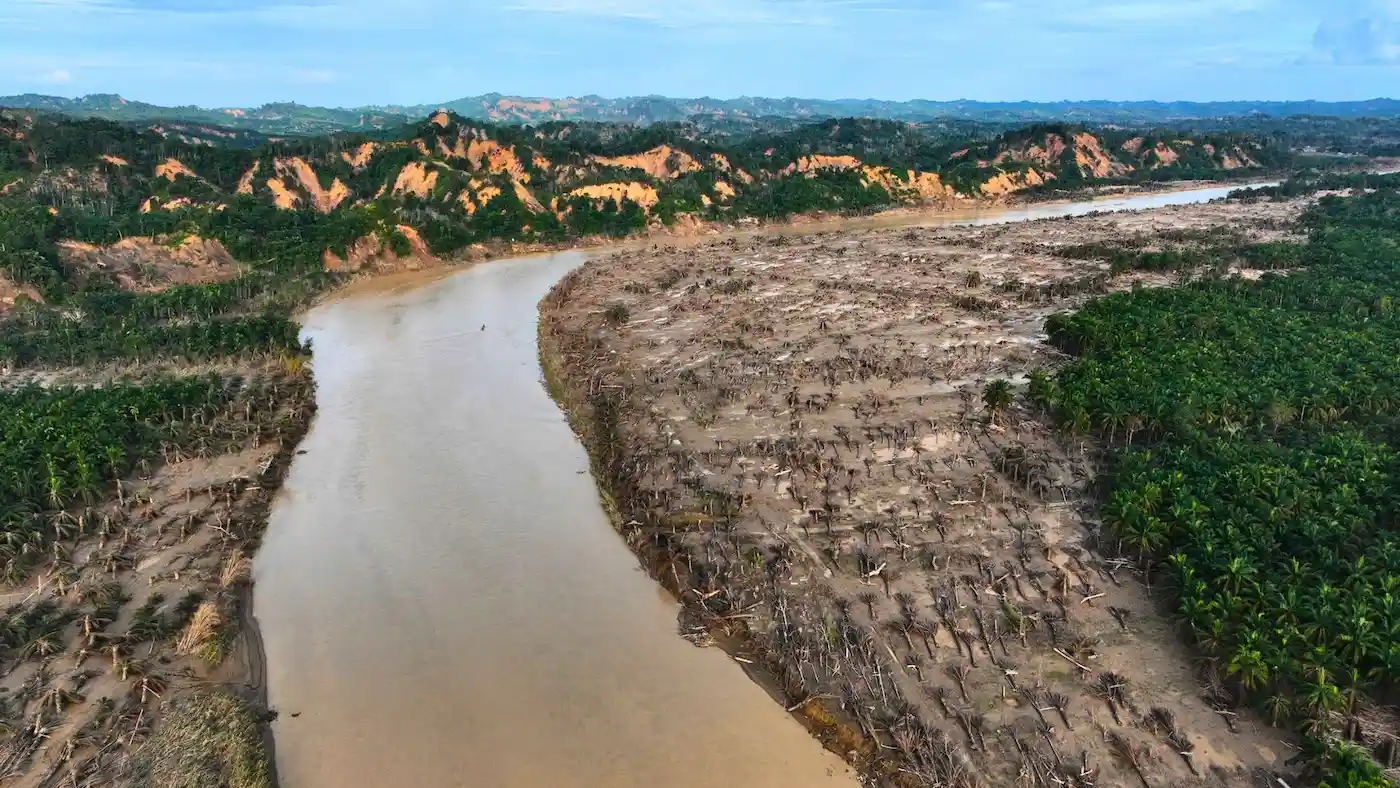
The ecological condition of Linge was bad. Landslides had brought down large trees, clogged roads. Parts of the road had falling down completely, leaving deep gaps. Electricity poles and cables lay scattered. The bridge that once sustained daily life had vanished. Land access was nearly impossible. The landscape reminded us of the fragility of human-made structures in the face of imbalance ecosystems.
With heavy hearts, we left behind vehicles and equipment that could not be evacuated. We carried on what was essential. The first group crossed including a journalist, to ensure what was happening in Linge would in no way to unnoticed. As they reached the other side, we waved in relief that the message would get through.
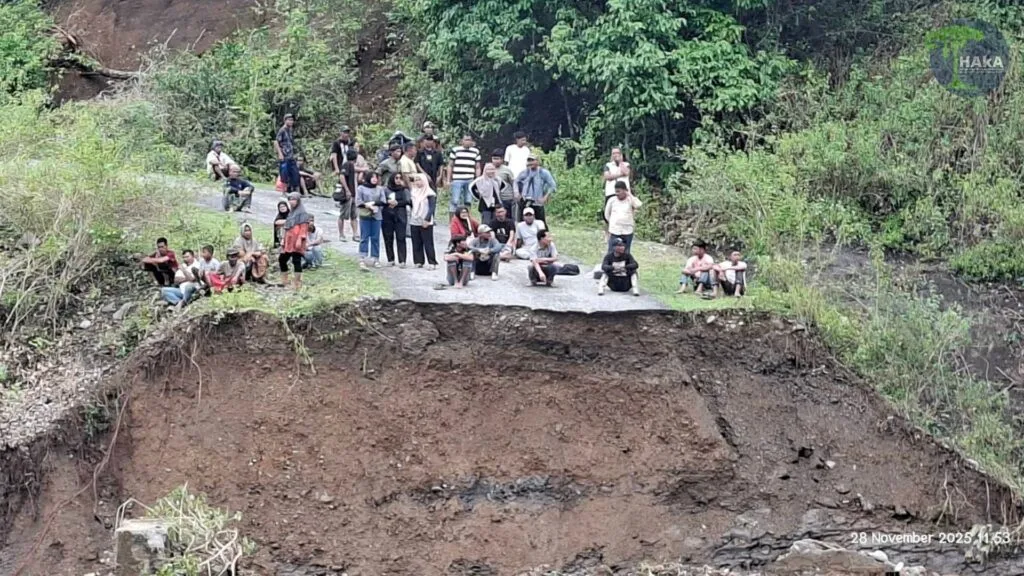
This success brought urgency. Supplies were nearly gone. Staying was no longer possible. Early the next morning, the decision was made: everyone would leave, crossing the river the same way.
On Saturday, November 29, 2025, two inflatable rafts, once prepared for festival activities, became lifelines for 41 people. With the help of experienced rafters, the river was classified as Grade 3+: “Strong currents, unpredictable waves, active whirlpools, and angled drop spots made for minimal maneuvering room.”
Crossing took three hours. Three hours measured not only by distance, by miles. But by fear, focus, and trust. No one asked to stop. We waited for each other, held hands, and ensured no one was left behind. Even after crossing, the journey continued on foot, through landslides that demanded patience at every step.
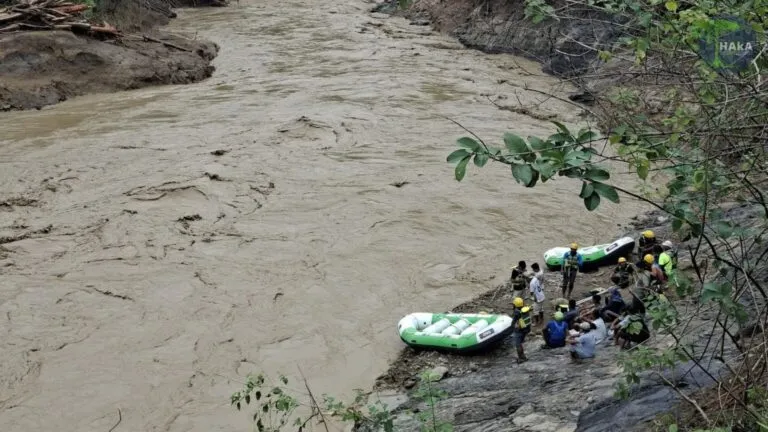
We arrived in Owaq Village and stayed in SMA Negeri 13 Takengon for the night. Taking a river bath was not a choice anymore. The villagers generously shared that little they had, flood, room, and concern. Eating rice and instant noodles that night was heaven, not because it was enjoyable, but because it was appreciated.
On Sunday, November 30. We gathered before leaving, as we always did, to set targets and rebuild morales. The target was Uning Village. A group photo was taken, simple and unguarded, unaware that the path ahead would be among the hardest we would face.
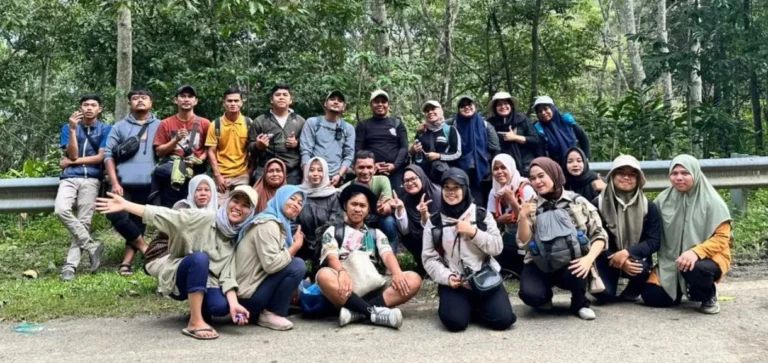
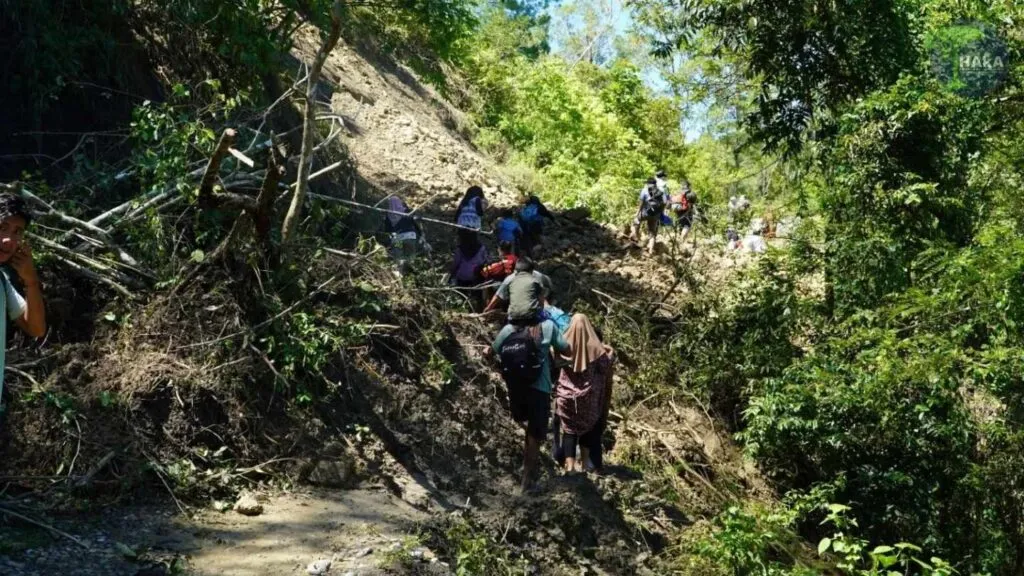
We passed through light to severe landslides along approximately 400 meters, taking about three hours to get through. The ground had turned into thick mud from collapsed roads that had not yet dried. The soil was still extremely wet; one wrong step, and the mud could reach an adult’s chest, capable of trapping anyone. Throughout the journey, it felt like a nightmare: roads we had passed smoothly just days before had completely collapsed, making us forget what they once looked like. There, local residents were working together to build an emergency road from wooden planks. They worked hard not just for us, but to open access for everyone. Seeing that stirred a quiet feeling in our hearts: that amid disaster, humanity often shines brightest.
The landslides did not dampen our spirit. We tried to navigate every slippery edge of mud, but we were only human. The brutality of the terrain caused four among us to faint. Tears followed. At that moment, we were no longer organizers, no longer a “program group,” but ordinary people in need of help. And the villagers who were working together helped us—calming us, assisting us to stand again. That day’s journey felt endlessly long. Energy was drained, mental strength pushed to the limit. On one hand, we had to calm ourselves; on the other, as organizers, we felt responsible for reassuring participants who had begun to think of their families back home—were they safe, were they worried, did they know where we were?
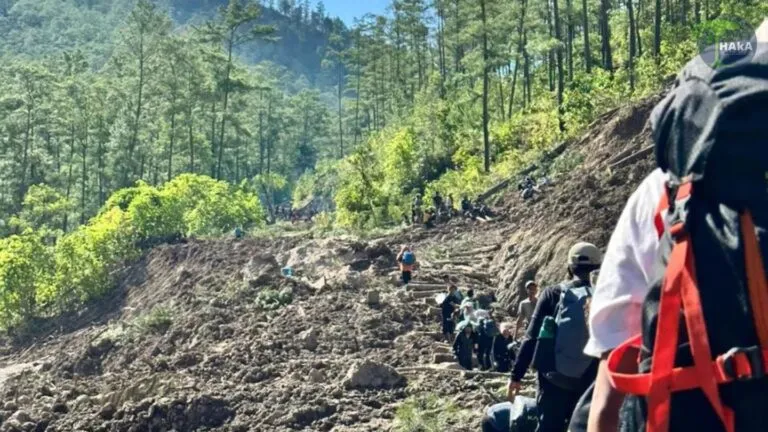
As dusk approached, anxiety pressed in: we had not yet found a village to stay in. Thoughts occasionally crossed our minds—“Do we have to stop on the road tonight?”—but we quickly dismissed them. We kept walking until we finally arrived at Uning Village. We were helped by a friend from one of the groups, and his family welcomed us despite their own hardships. They allowed us to stay, helped us obtain clean water even though it had to be fetched across several landslides, and gave us a sense of safety amid the frightening situation. That night, we slept more soundly than on previous nights, because at least we were not alone.
Monday, December 1, 2025, we continued the journey with Isaq Village as the target. “Today’s target is Isaq Village. Whatever the terrain, even if we walk all day, the important thing is to arrive safely. Don’t rush,” said Bang Abdul. The sentence was simple, yet it sounded like a lifeline. Some of us who were unwell were taken by motorcycle to the health clinic. The rest continued on foot through landslides, broken roads, puddles, and waist-high mud that had become our most loyal “companion.” Clothes had lost their shape, energy was depleted, and frustration suddenly peaked—crying in despair, asking ourselves, “How much more mud do we have to get through?”
Then, the sound of a trail motorcycle passed by. There was a familiar feeling that made us spontaneously stop crying. We noticed items on the rider that did not feel unfamiliar, and without certainty, we chose to act—shouting, trying to stop the motorcycle. And it turned out to be true. Like an oasis in the desert, we saw three familiar faces—our colleagues sent by the office to pick us up. We were deeply grateful. At that point, the burden felt halved. “So the office knows we are going through this hardship,” kept repeating in our minds, over and over, as if to confirm that this was real.
We were taken by truck to a community-built emergency post. We were given food, a place to sit, and a chance to breathe. Travel strategies were rearranged: divided into five teams for efficiency. The journey continued much the same—some sections could be assisted by open-back vehicles to the last accessible point, after which we walked again through landslides and broken roads. At that moment, we wondered, “Do we still have to walk again? Is it possible for us to reach Takengon today?”
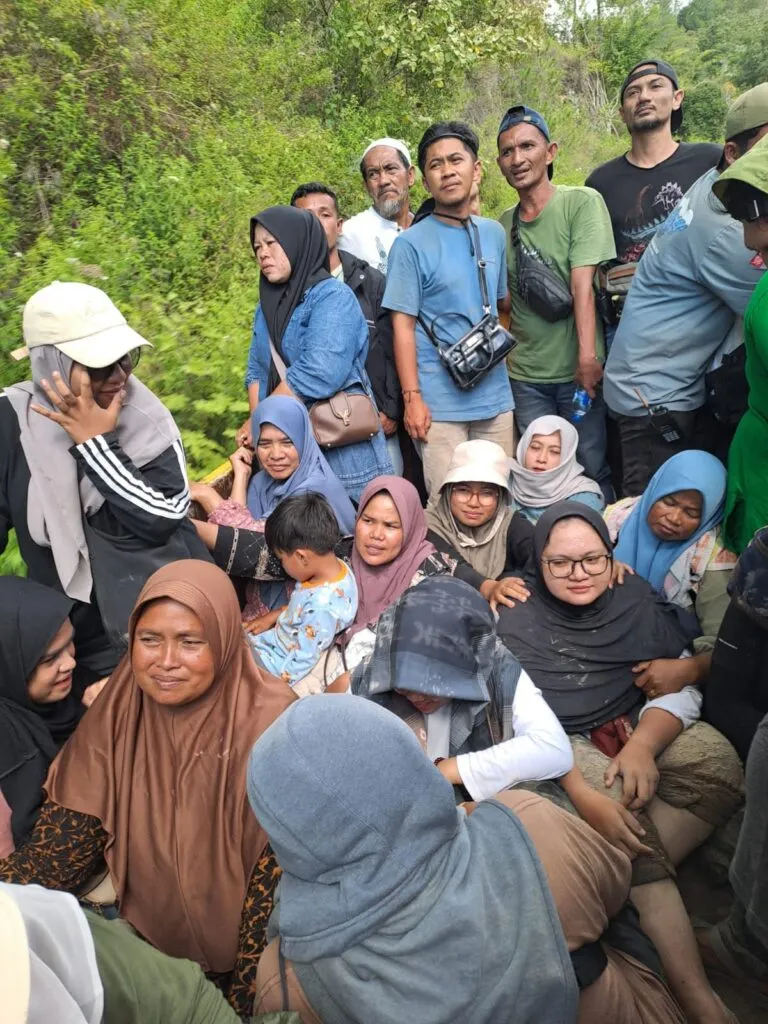
Not long after, three 4x4 vehicles and one Innova Reborn arrived. At first, we thought they were local residents passing through. But then someone very familiar stepped out—a colleague who always accompanies us in the field. Tears broke out again. We felt closer to home. That day, we felt that none of our sacrifices were in vain. We felt valued—not because we were extraordinary, but because we endured together. We never imagined that day would be the last of the journey, and that we would return to Takengon. It felt like a dream that was almost unreal.
We arrived in Takengon and were welcomed by the HAkA Team who had been waiting. Emotions of relief, gratitude, and confusion mixed together. At first, we thought we were the only ones who experienced something like this. Then we realized: the disaster was far greater, its impact widespread, and thousands of lives were affected.
This journey, in the end, was not merely a story about rain, landslides, raging rivers, broken roads, or environmental changes we witnessed turning 180 degrees before our eyes. It is a story about people who kept moving toward safety; about bodies forced to walk when energy was nearly gone; and about minds forced to stay strong when hearts wanted to collapse. What saved us was a unity of leadership, resilience, and solidarity. No one complained of being unable to continue, even though the terrain was extremely difficult. We took care of one another—with our hands, with our words, with the willingness to wait, and with the courage to leave no one behind.
And perhaps, behind it all, there was the most human reason that kept us moving forward: we wanted to be safe, to reunite with our families at home, and to ensure that after everything that happened, we could still embrace the people we love—with a gratitude that would never be the same as before this journey began.
Share This: