Aceh’s Forest Cover Loss and Disaster Risk Dynamics in Aceh
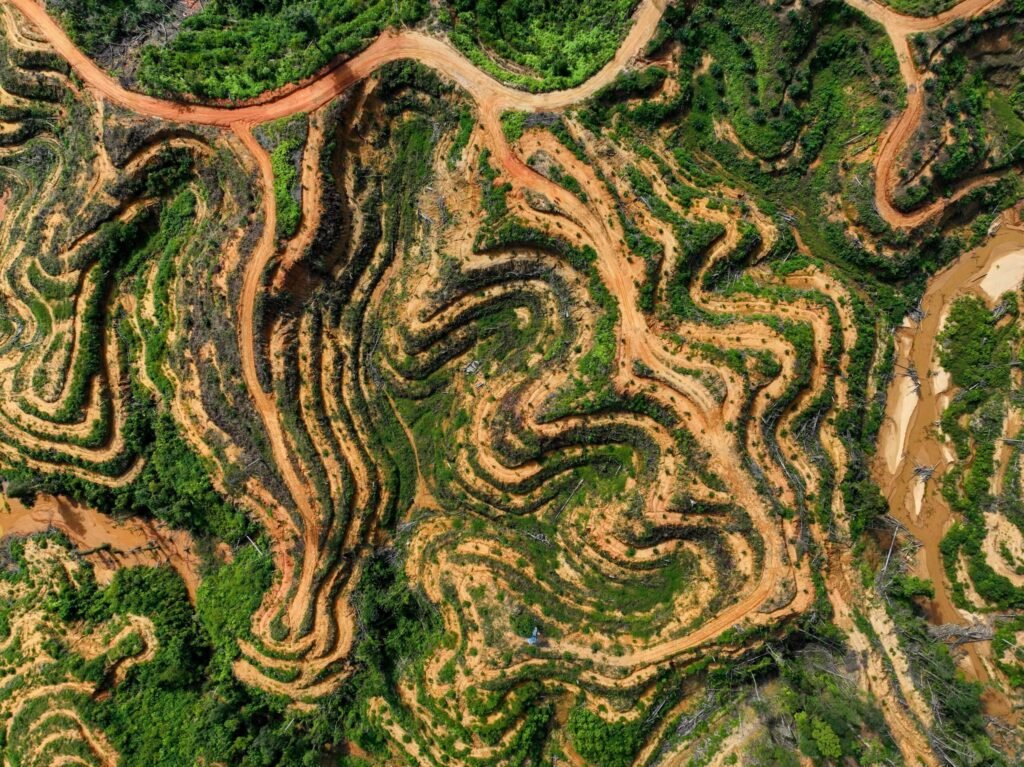
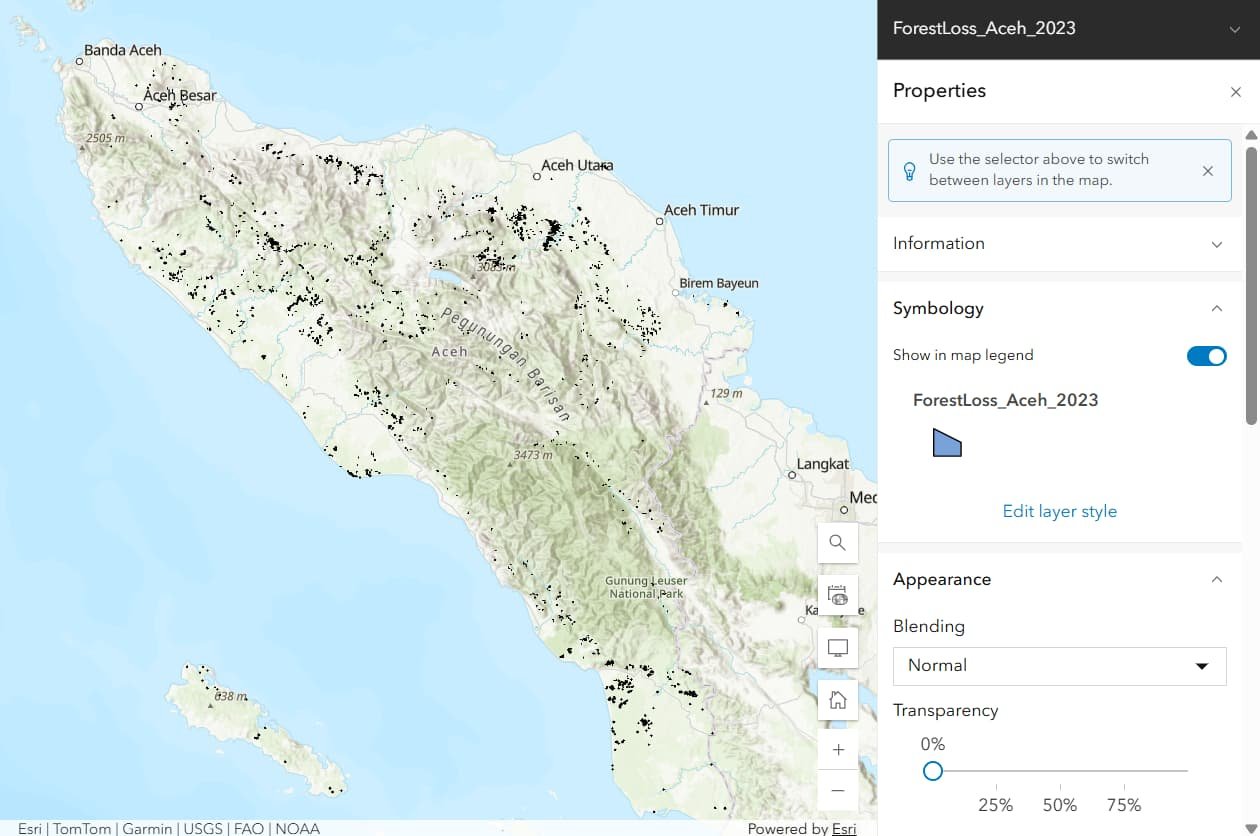
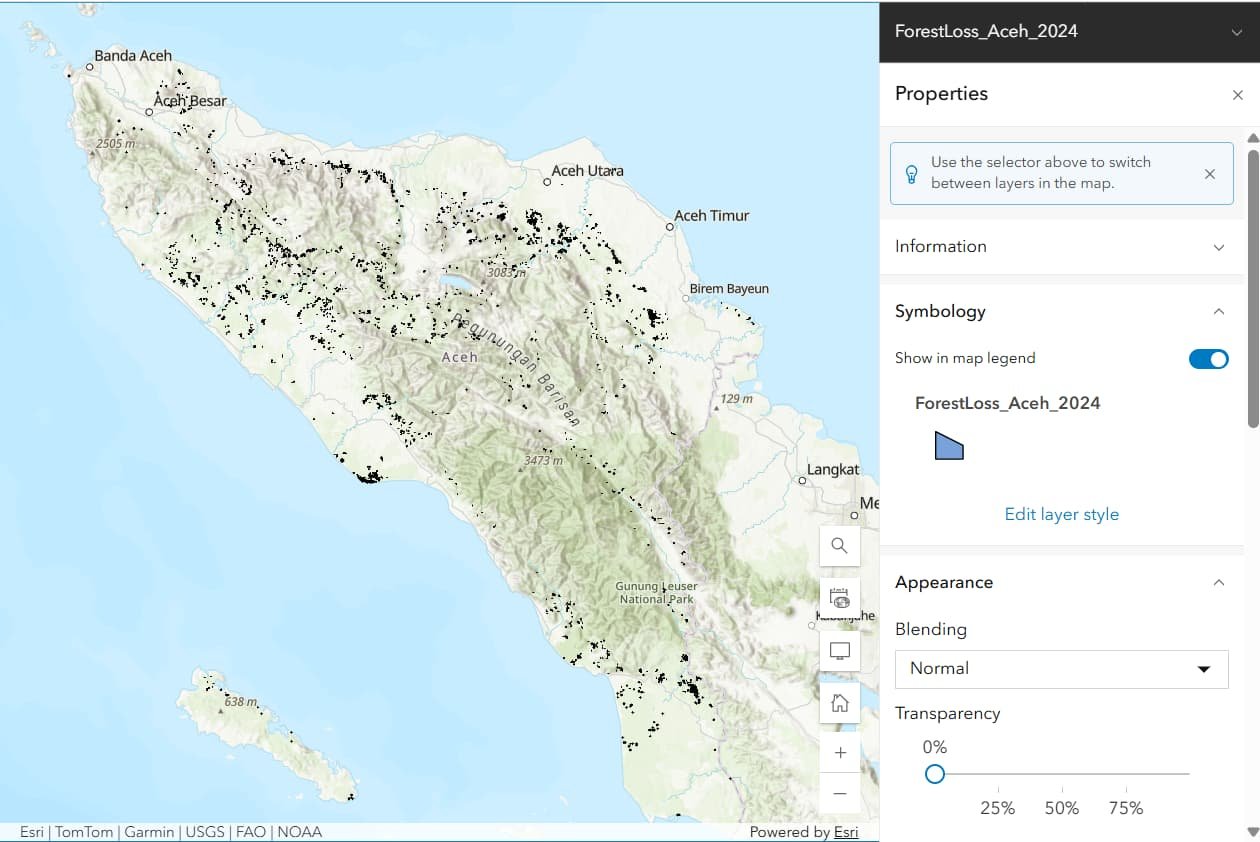
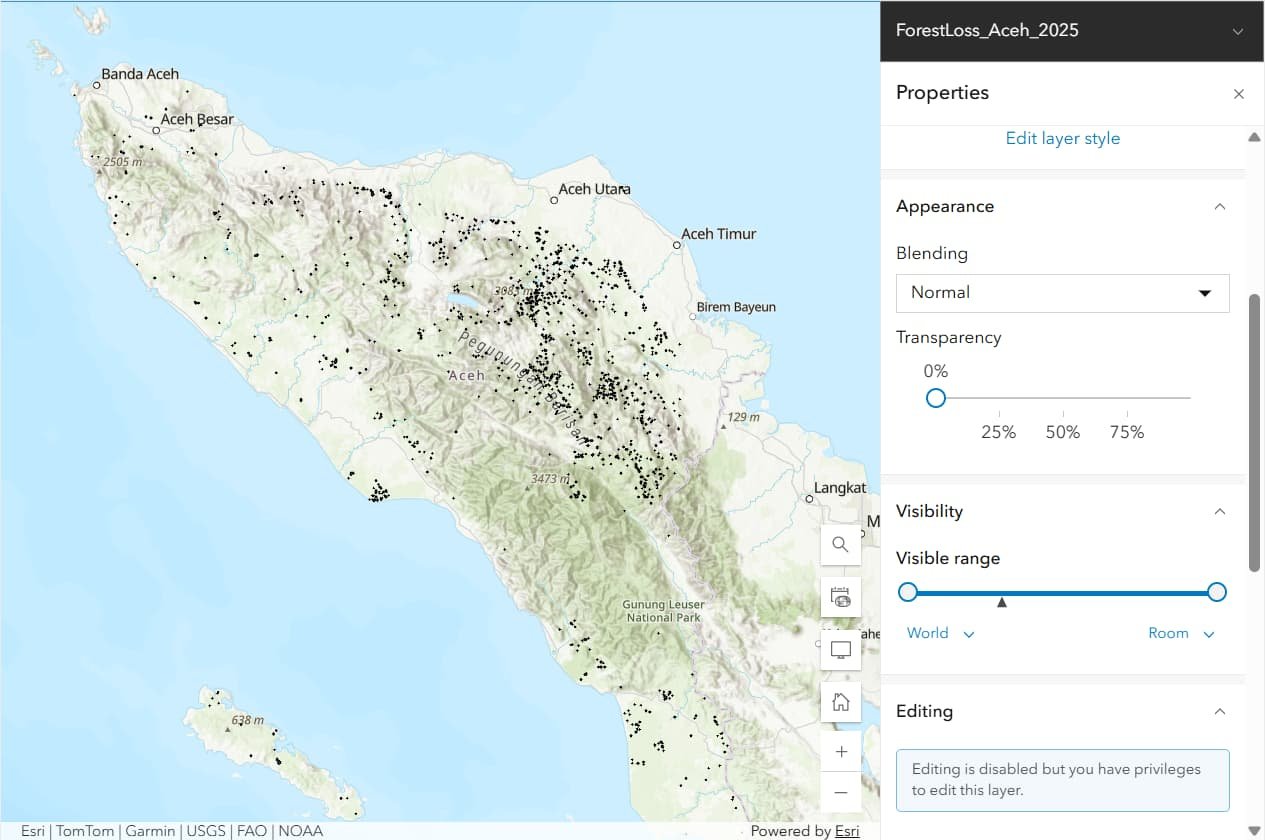
Banda Aceh, February 25, 2026 – Forest cover loss in Aceh throughout 2025 is estimated to reach 39,687 hectares, an increase of more than 274 percent compared to 2024. This spike is one of the highest in the past decade. However, field findings indicate that this damage cannot be interpreted solely as the impact of natural disasters, but is closely related to a long-standing, structured pattern of forestry crime.
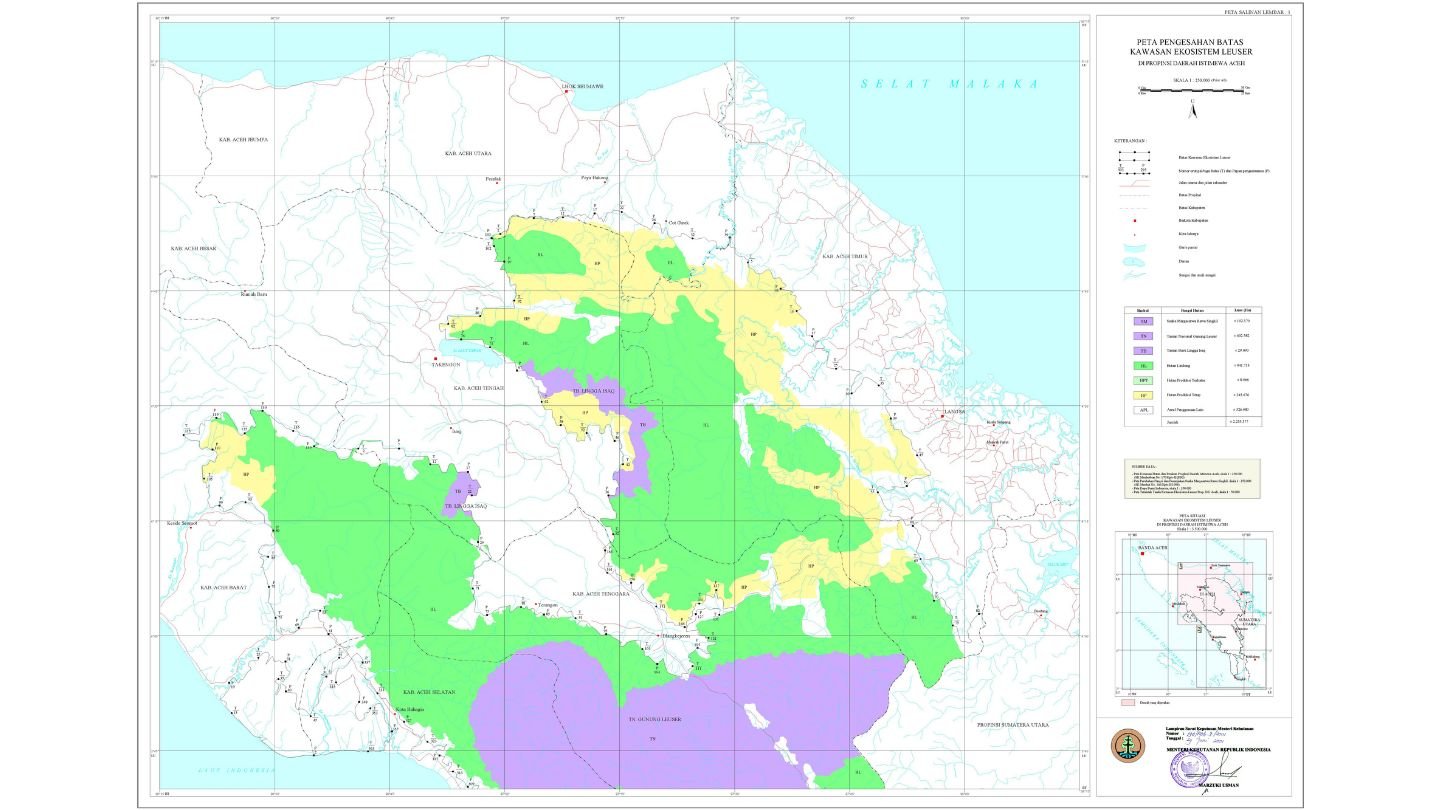
Community-based field verification indicates that approximately 80 percent of forest cover loss occurred within state forest areas, including protected forests, production forests, national parks, and wildlife sanctuaries—areas functionally designated as ecological protectors. Of this total loss, approximately 71 percent occurred within the Leuser Ecosystem, a strategic landscape that supports hydrological systems, biodiversity, and the livelihoods of millions of Acehnese.
These findings confirm that the greatest pressure on Aceh’s forests is occurring in areas that should be the last bastion of ecological protection.
Disasters as Accelerators, Not Sole Causes
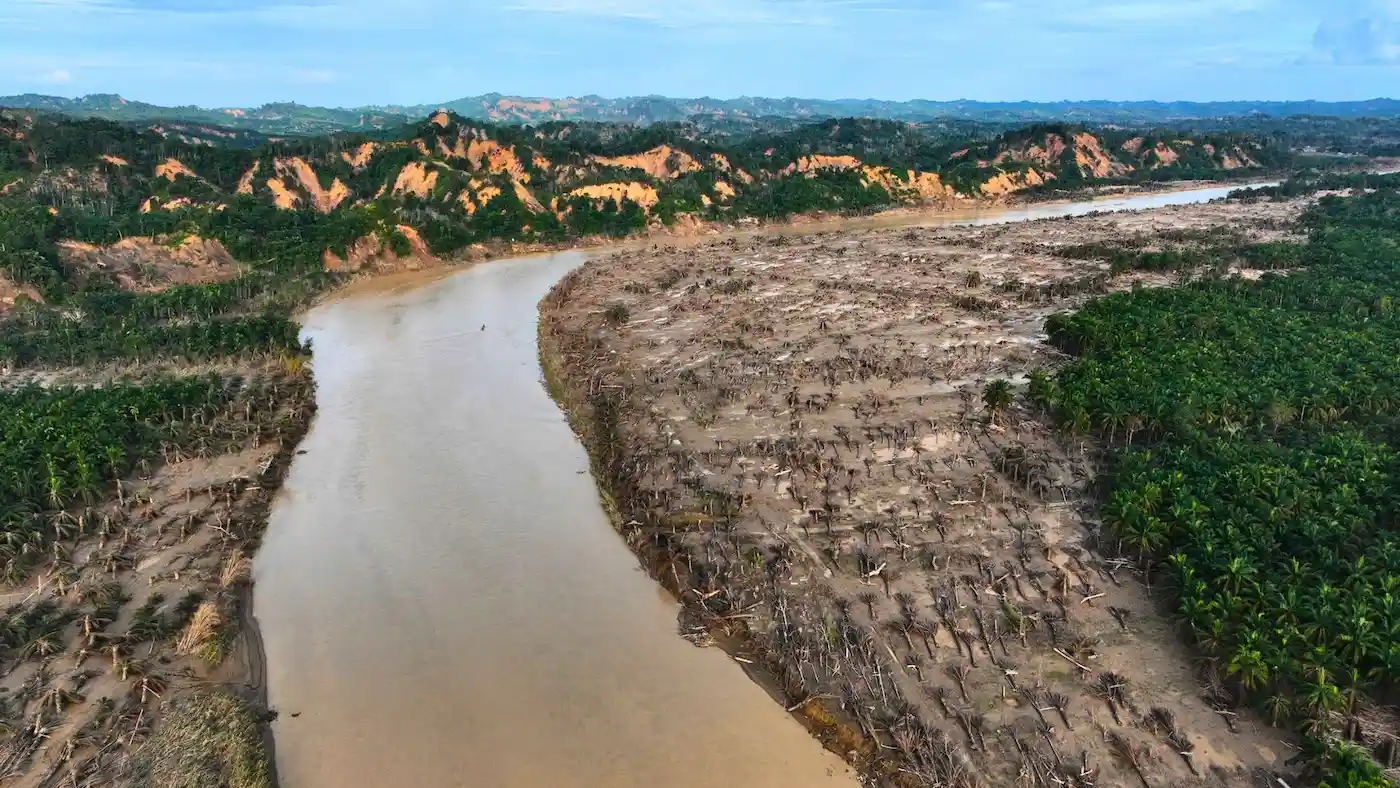
Some of the forest cover loss at the end of 2025 was indeed related to a series of hydrometeorological disasters in the form of major floods, landslides, and river widening that occurred in November–December 2025. However, data analysis shows that the increasing trend of forest cover loss had been ongoing before these major disasters occurred.
In the period January–September 2025, estimated forest cover loss in the Leuser Ecosystem Area reached 5,955 hectares, exceeding the total forest cover loss for all of 2024. This fact indicates that disasters act as accelerators of previously fragile landscapes, not the sole cause of damage.
According to analysis, ongoing forest destruction over the past few decades has reduced Aceh’s ecological resilience. As forest cover in upstream areas, watersheds, and peatlands continues to weaken, extreme weather events quickly escalate into large-scale disasters.
Forestry Crime as Organized Economic Crime
Field verification shows that forestry crimes in Aceh are not sporadic events, but rather part of organized economic crimes with recurring patterns, actors, and methods.
Illegal logging activities operate within a well-organized, multi-layered supply chain, from loggers in the field to receiving industries such as sawmills, logging platforms, and factories. This structure resembles a pyramid: those in the field bear the greatest legal risks with minimal profits, while financiers and the industry enjoy substantial profits with relatively low risks.
Illegal timber is often “laundered” through document manipulation and weak origin verification, allowing it to enter the legal market. This pattern suggests that illegal logging is not an individual activity, but rather part of a shadow economic system that exploits governance loopholes and weak oversight.
In addition to illegal logging, deforestation also occurs through the manipulation of land status, including the issuance of illegal Land Certificates (SKT) and the release of areas through cooperative schemes or administrative claims “for the community,” which ultimately lead to large-scale monoculture plantations. This illegal, semi-legal, and legal process disguises forestry crimes as administrative issues.
Conservation Areas Are Not Immune
Pressure on forests is also found in high-conservation-value areas, including wildlife reserves and peat ecosystems. Deforestation, plantation expansion, and habitat fragmentation in these areas demonstrate that protected status does not automatically guarantee the area’s safety.
The fact that the damage occurred in an area with the highest protection status indicates a serious failure of oversight and law enforcement. While state instruments are available, field findings indicate overlapping permits, changes in area status without rigorous ecological verification, and a lack of transparency and integration of permit data.
This situation creates a grey area that is prone to abuse and allows forestry crimes to occur with low risk for key actors.
Field Tracks and Hazardous Areas
Based on comparative data and facts on the condition of Aceh’s forest cover in 2025 and community-based field verification, there are three districts with the highest forest cover loss throughout 2025., both due to natural and anthropogenic factors. All three cumulatively contribute a significant portion to Aceh’s total forest cover loss.
First, East Aceh, with estimated forest cover loss reaching 8,564 hectares (21.6%). This loss is dominated by natural factors amounting to 7,103 hectares, but anthropogenic pressure was also recorded as significant at 1,431 hectares.. Field findings show a pattern of repeated damage in areas such as Blang Tualang and Birem Bayeun, indicating weak landscape recovery in these areas.
Second, Central Aceh, which recorded a loss of forest cover of 6,910 hectares (17.4%), with a composition of 5,525 hectares due to natural factors and 1,385 hectares due to human activities.. This pressure occurs mostly in mountainous and upstream areas, increasing the risk of hydrological disturbances in downstream areas.
Third, Gayo Lues, with estimated forest cover loss of 6,773 hectares (17.1%). Most of the losses in this region come from natural factors (6,501 hectares), but still shows the high vulnerability of the landscape to hydrometeorological disasters when forest cover has been degraded.
On the other hand, in 2025, the Rawa Singkil Wildlife Sanctuary (SM) area will again experience an increase in forest cover loss of 7.5% compared to the 425 hectares that occurred in 2024.
This finding is an indication based on verified data and field work., not merely a statistical claim. The concentration of forest cover loss in these districts shows that pressure on Aceh’s forests is structural and localized, not incidental.
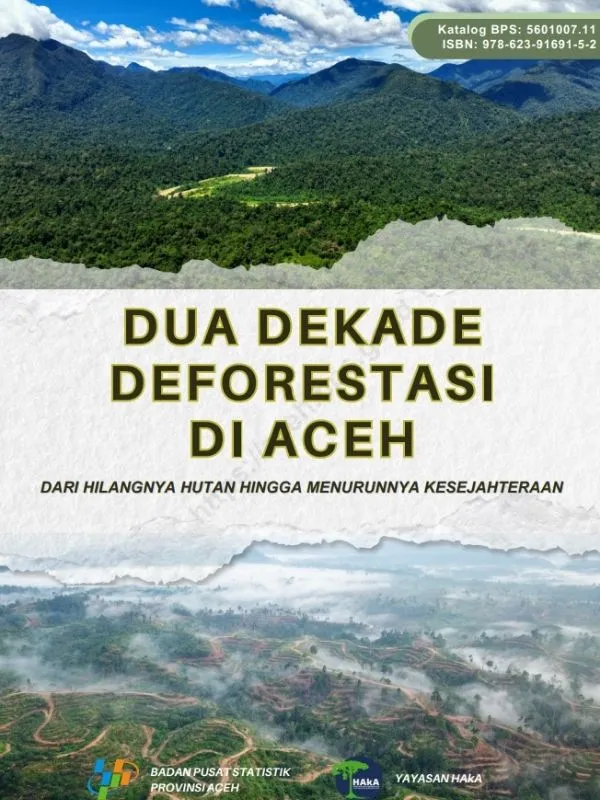
According to the analysis, the major disaster that will occur in Sumatra in late 2025 will not be an isolated natural event, but rather the result of accumulated forest destruction over the past two decades. As forests continue to weaken, the landscape loses its ecological resilience, and disaster becomes a predictable consequence.
The findings on Aceh’s forest cover loss by 2025 demonstrate that forest protection cannot be separated from the disaster risk reduction agenda. Without serious improvements in forest governance and law enforcement, pressure on Aceh’s forests could continue, along with the increasing risk of flooding, landslides, and ecological crises.
Top Recommendations
To halt the rate of forest cover loss and reduce the risk of ecological disaster in Aceh, the following steps are needed:
- Law enforcement based on organized economic crime with a follow the money approach and the implementation of money laundering (TPPU) crimes to target financiers and main beneficiaries, not just field actors.
- Integration and transparency of permits, including review of problematic permits, integration of forestry and plantation data, and openness of active permit maps to the public.
- Audit the wood supply chain from upstream to downstream, by requiring the industry to disclose raw material sources and implement a transparent and verifiable tracking system.
- Protection of indigenous communities and prevention of land conflicts, through the application of the principle of free, prior and informed consent (FPIC) and the cessation of criminalization of citizens.
- Mitigation of ecological disasters based on spatial planning and restoration, including accelerating the ratification of the Leuser Ecosystem Area spatial planning, accommodating the Leuser Ecosystem Area in the Provincial and District Spatial Plans, restoration of forest and peat areas, and strengthening the early warning system.
Without these steps, Aceh’s forest cover loss risks continuing and deepening an ecological crisis whose impacts will be felt far beyond Aceh itself.
Please read the presentation here: https://bit.ly/LonjakanKehilanganTuputanHutan
Media Contact :
Rivani | Comms Supervisor | Phone/WhatsApp: 081328676188 | Email: comms@haka.or.id